FAU Receives Grant to Transform Underwater Robotic Communication
Source: FAU
Florida Atlantic University has been awarded a $1 million grant through the AUKUS Maritime Innovation Challenge, a trilateral defense innovation initiative supported by Australia’s Advanced Strategic Capabilities Accelerator, the United Kingdom’s Defense and Security Accelerator, and the United States Defense Innovation Unit.
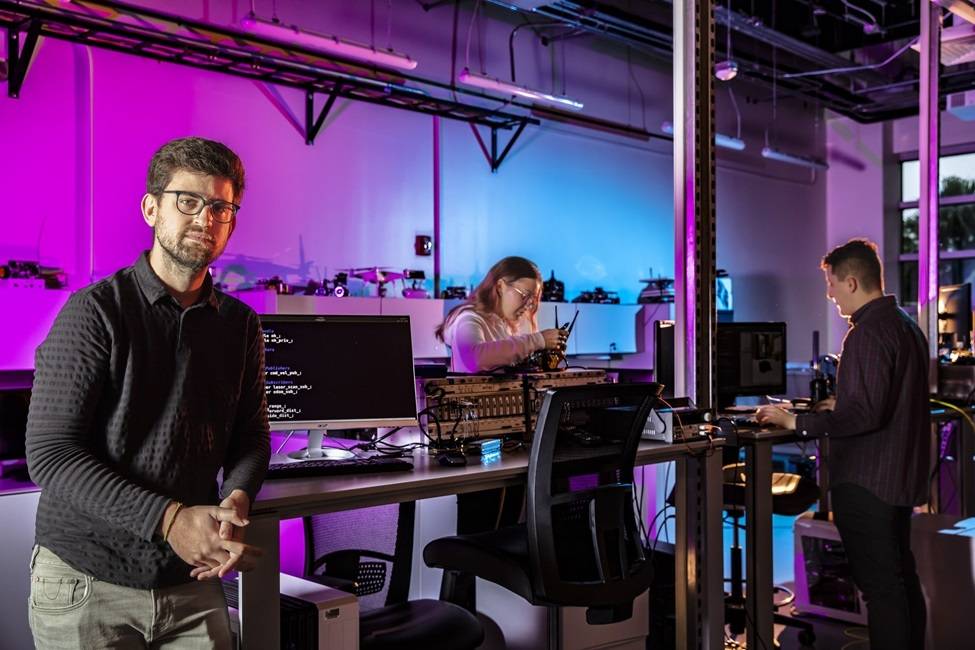
The project, led by FAU’s Center for Connected Autonomy and Artificial Intelligence (CA-AI) in collaboration with Hydromea, a Swiss pioneer in visible-light optics, was selected from a highly competitive pool of proposals submitted by universities, research institutions, and industry across the United States, Australia, and the United Kingdom
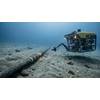
The team will develop and demonstrate a next-generation underwater communication and networking system designed to help autonomous underwater vehicles, seabed sensors, and maritime operators share information more quickly, reliably, and securely. The technology addresses one of the greatest challenges facing underwater operations today: maintaining real-time communication in an environment where conventional wireless technologies – such as radio waves and GPS – do not function.
“Today’s underwater communication systems typically force operators to choose between range and speed,” said George Sklivanitis, Ph.D., principal investigator, associate director of the CA-AI, the Charles E. Schmidt Research Associate Professor in the College of Engineering and Computer Science, and a fellow of FAU’s Sensing Institute (I-SENSE). “Acoustic communication signals can travel long distances but offer limited bandwidth, while optical communications can transmit data quickly but only over short distances.”
The FAU-Hydromea solution combines both technologies into a single programmable platform. Long-range acoustic links will provide resilient command-and-control communications, while high-speed visible-light links will enable rapid data sharing among nearby autonomous vehicles and sensors. The system will be capable of adapting to changing underwater conditions and maintaining connectivity even in congested or contested environments.
Researchers also anticipate the technology will provide a pathway toward future operational deployment for allied maritime forces while supporting broader applications in scientific research, environmental monitoring, and offshore industries.
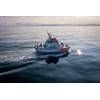
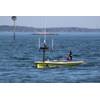
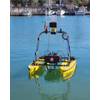
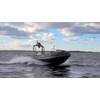
Over the next 12 months, the team will conduct controlled testing at Hydromea’s facilities in Switzerland and at FAU’s SeaTech campus in Dania Beach, followed by increasingly sophisticated field demonstrations off the coast of Australia involving autonomous surface vessels, underwater vehicles, and stationary seabed systems.
“This technology could help fleets of autonomous underwater vehicles coordinate more effectively, support persistent ocean monitoring, improve situational awareness, and enable faster sharing of data collected beneath the sea surface,” said Stella Batalama, Ph.D., dean of the College of Engineering and Computer Science. “Ultimately, it enhances the ability of autonomous systems to operate cooperatively in real-world ocean environments.”
The partnership builds on the complementary expertise of FAU’s CA-AI and Hydromea SA, as well as on ongoing National Science Foundation-funded CA-AI work on networked swarms of autonomous underwater vehicles.



 August 2026