NOAA and Sofar Advance Weather Forecasting
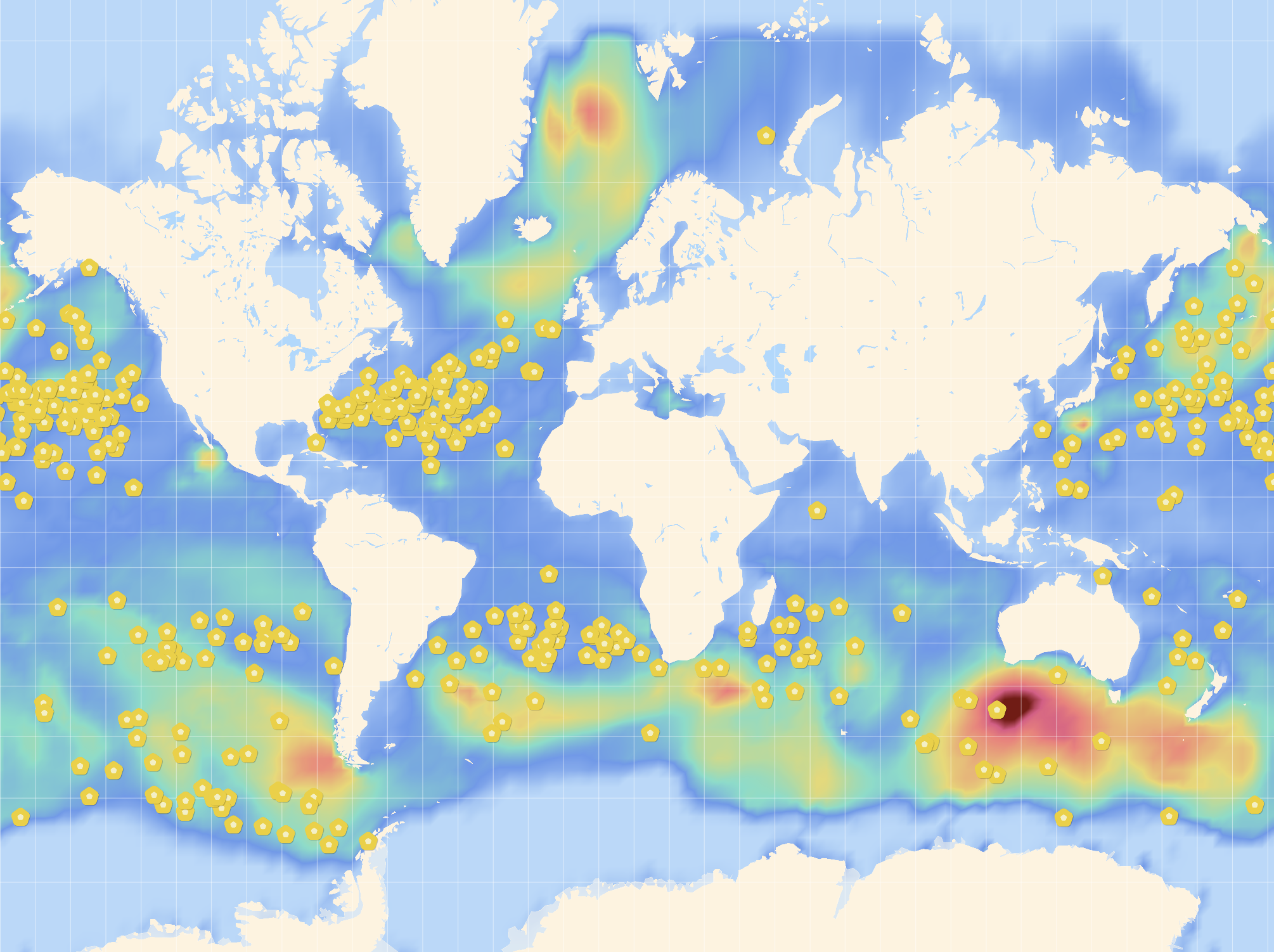
Source: Sofar Ocean
NOAA’s Geophysical Fluid Dynamics Laboratory (GFDL) and Sofar Ocean have partnered to build modeling systems that advance marine weather forecasting.
GFDL and Sofar’s three-year cooperation, which began in late 2024, combines parallel efforts at each organization to produce a coupled atmosphere-wave-ocean model that improves the accuracy of global marine weather forecasts and regional extreme weather scenarios.
Scientists at NOAA and Sofar are already leveraging preliminary versions of the coupled model to produce more accurate ocean weather forecasts and improve safety at sea for coastal communities, maritime shipping and other blue economy businesses.
“Our collaboration with Sofar explores the benefits of shared technologies and ideas in modeling the coupled Earth system,” said Lucas Harris, leader of GFDL’s Weather and Climate Dynamics Division. “By combining GFDL model components with observations from Sofar’s global Spotter network, we can build a model to produce highly accurate global marine forecasts.”
Sofar Ocean's Spotter Platform is a modular, rapidly deployable marine sensing system that delivers real-time surface and subsurface ocean data. GFDL and Sofar use the millions of real-time and historical observations made by Sofar's global network of Spotters to calibrate models and initialize near real-time forecasts.
GFDL and Sofar share resources to accelerate model development. They leverage components from GFDL’s System for High-resolution prediction on Earth-to-local Domains (SHiELD) and Modular Ocean Model (MOM6), as well as the millions of real-time and historical observations made by Sofar’s global network of free-drifting ocean sensors, called Spotter buoys. These Spotter observations are used to calibrate models at the air-sea interface and initialize near real-time operational forecasts. Internally, Sofar also leverages AI to fine-tune model parameters.
GFDL and Sofar’s experimental coupled model has already improved Sofar’s global marine weather forecast accuracy. For example, the model’s forecasts of wind speed are now outperforming other global forecast models in the South Atlantic Ocean and Indian Ocean tropics.
By assimilating observations made by Sofar’s global network of Spotter buoys at the air-sea interface, GFDL and Sofar fill the observational gaps left by other data sources. Spotters, for example, deliver highly accurate wave and weather data amidst the heavy convection, rain, and clouds typical of storms at levels not possible for satellites. Sofar and GFDL, along with NOAA’s National Hurricane Center, leverage these Spotter observations to calibrate extreme weather models and initialize near real-time operational storm forecasts.






 February 2026