
UK Subsea Trials Site Completes First Major Test


-
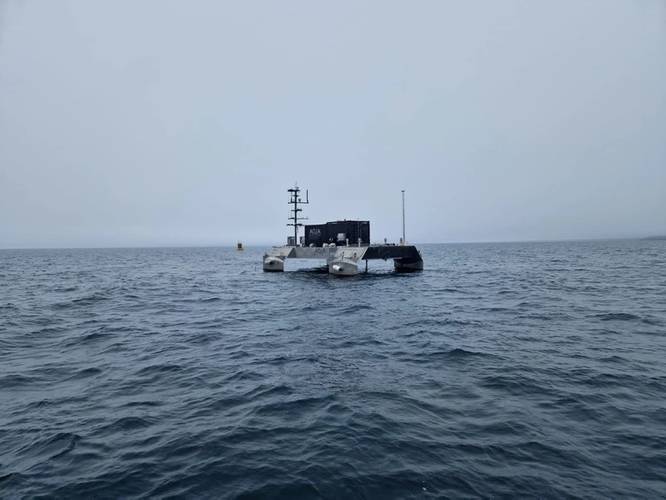 AUCA Ocean’s PIONEER USV in Plymouth Sound. Image from ACUA Ocean.
-
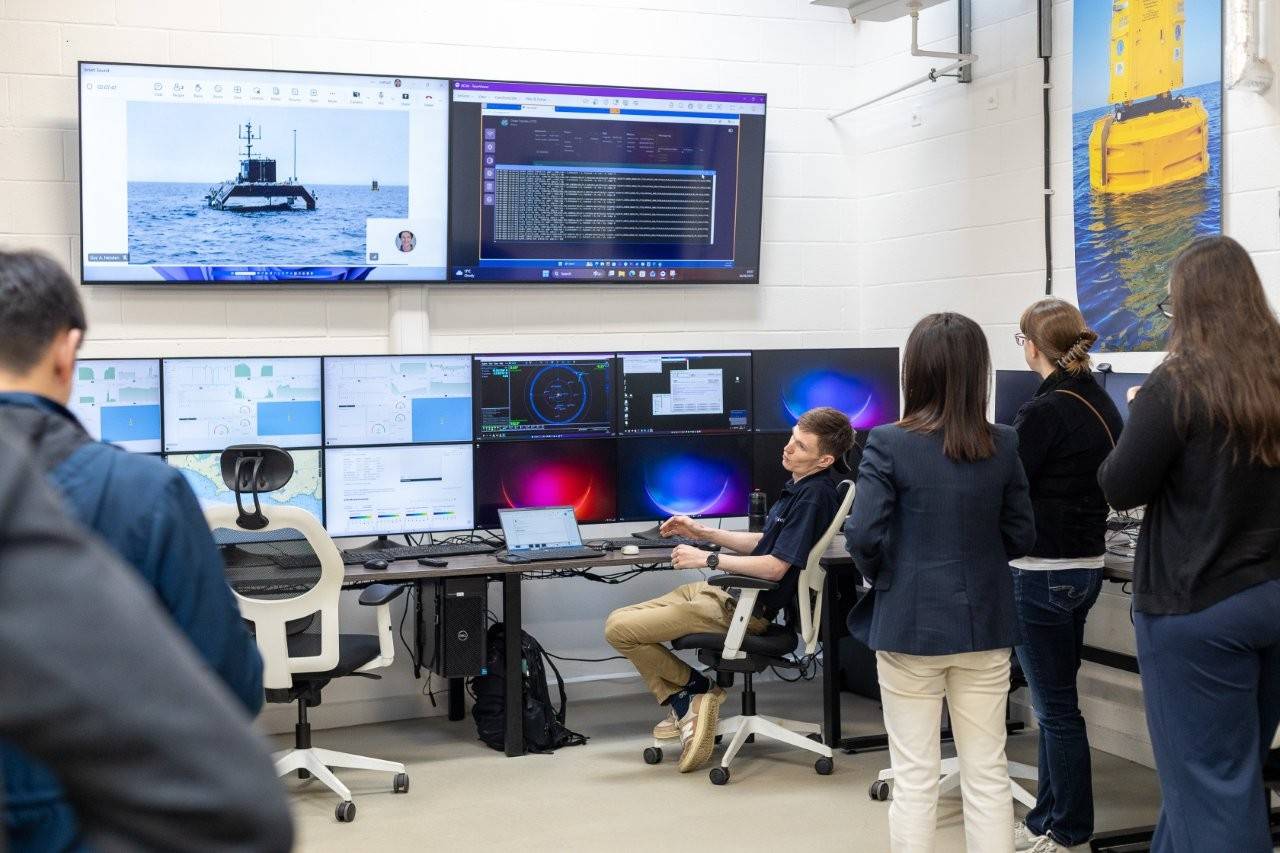
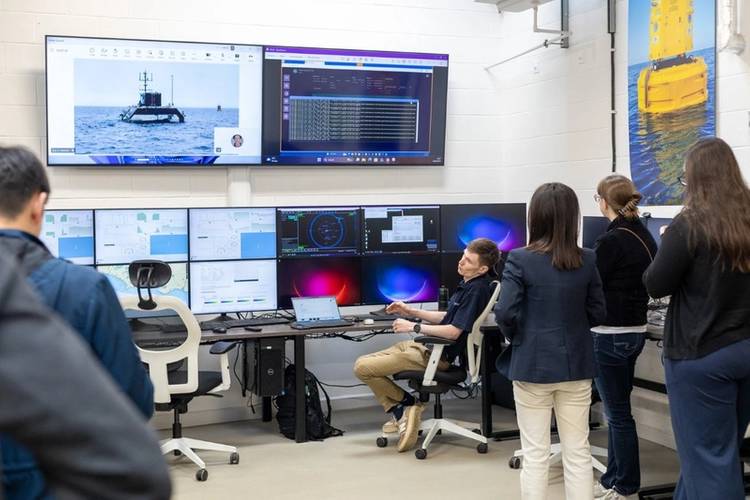 From PML’s remote operations centre, visitors were able to view live feeds, showing tracking and data telemetry from the AUVs and Sonardyne’s Origin 600 ADCP to the PIONEER USV. Photo from Sonardyne.
-
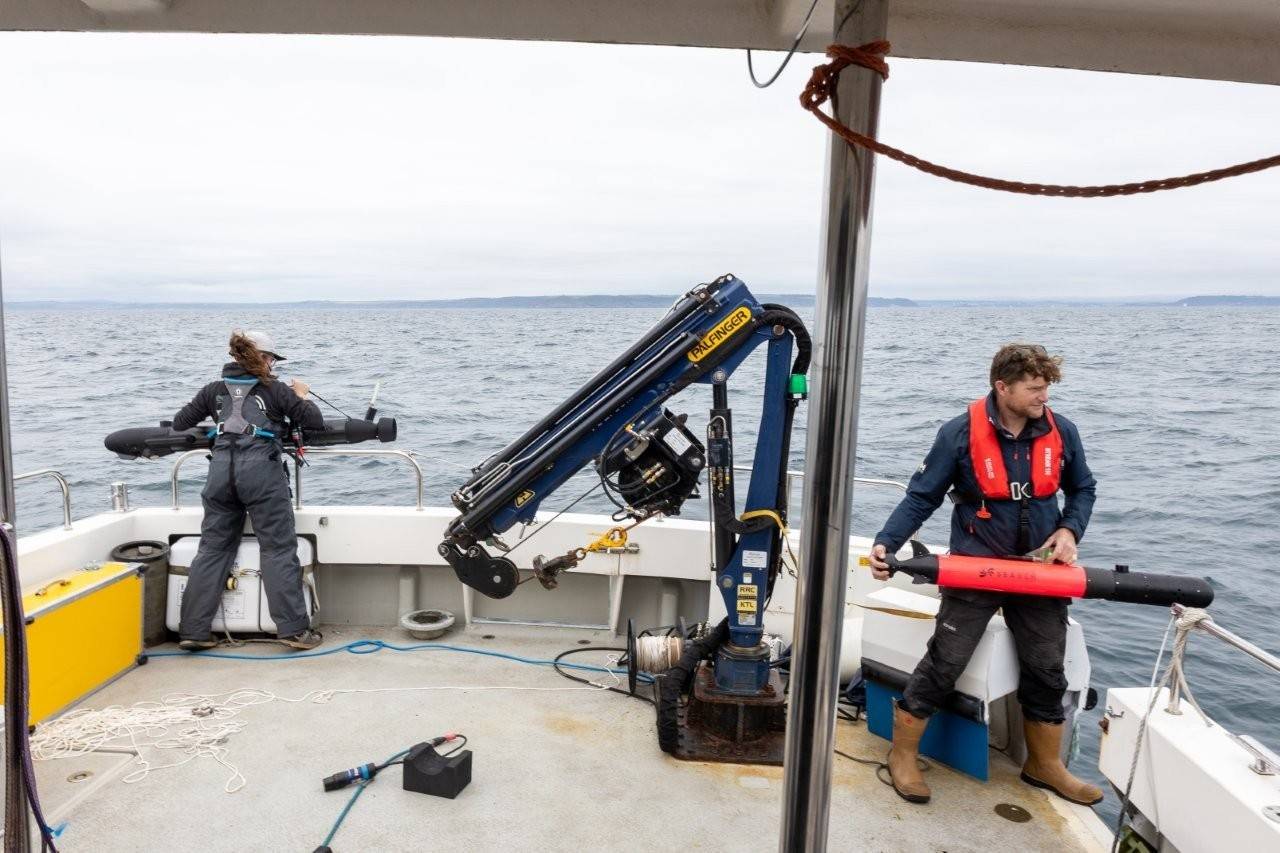
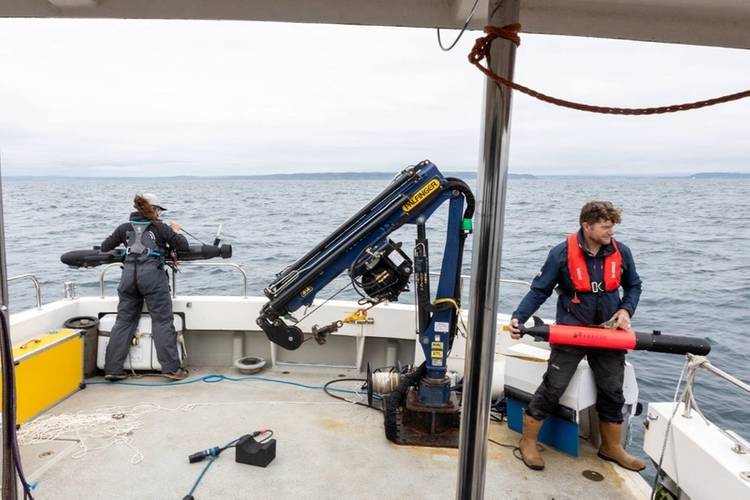 Seaber Yuco and ecoSUB Robotics being deployed from Sonardyne’s Echo Explorer survey vessel in Smart Sound Plymouth. Photo from Sonardyne.
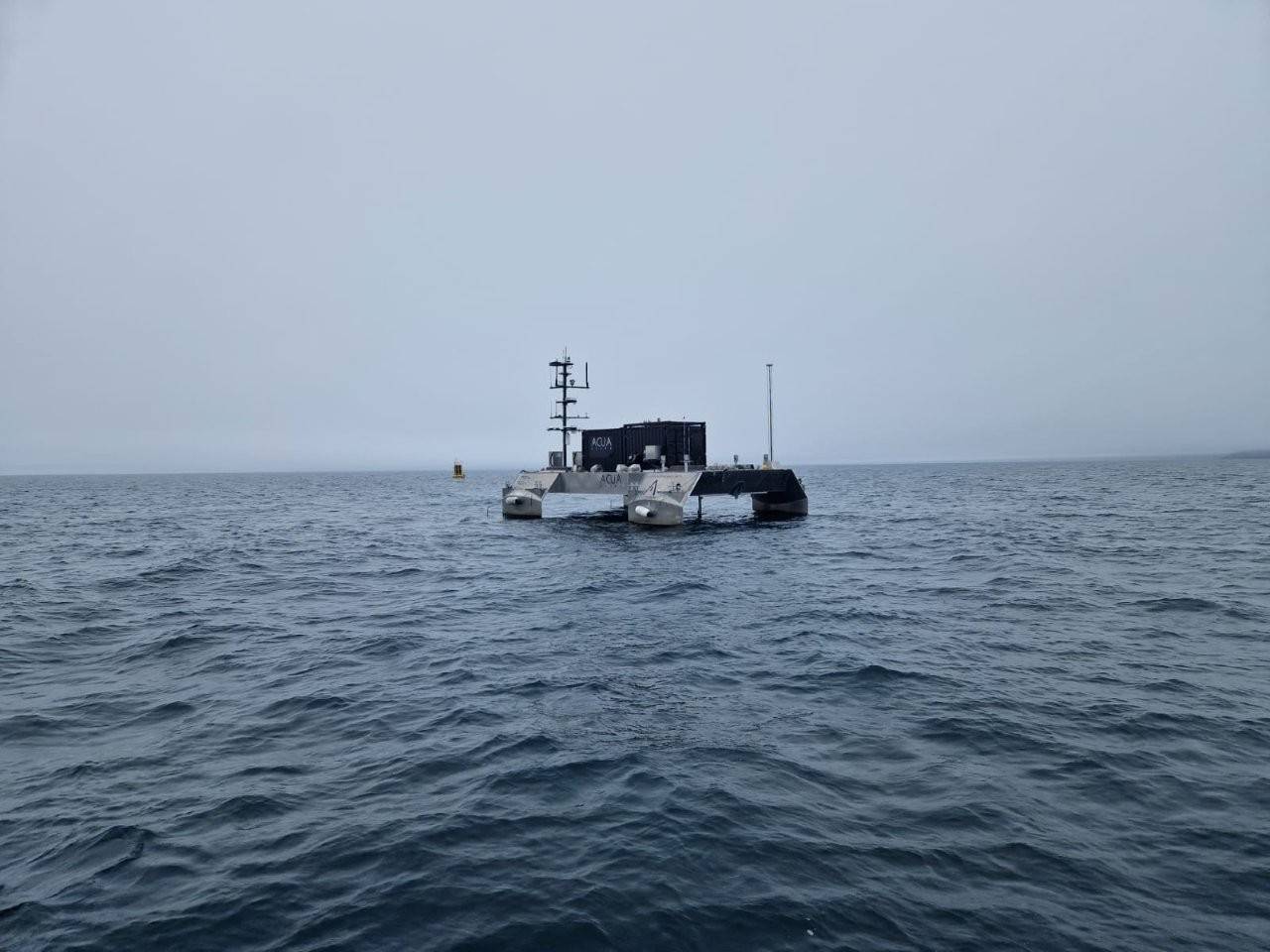
A new underwater trials site designed to accelerate UK marine autonomy and ocean sensing has completed its first major test thanks to a live, multi-marine surface and subsea robotic platform demonstration. The Smart Sound Connect Subsurface (SSCS) project, part of Smart Sound Plymouth, led by the University of Plymouth, with Plymouth Marine Laboratory (PML), saw platforms from ACUA Ocean, ecoSUB Robotics, Seaber and Sonardyne working together above and below the surface.
The all-day collaborative demonstration enabled visitors from business, science, defecnse and national bodies to view the potential of the three-year, USD$1.59 million (£1.2 million) SSCS project.
Delivered by Sonardyne, the SSCS’ infrastructure extends Smart Sound Plymouth and the Western Channel Observatory through a seabed node array for absolute positioning and communications, alongside other intelligent sensors within a highly characterized environment.
During the demonstration, both the University of Plymouth’s Seaber autonomous underwater vehicle (AUV) and an ecoSUB AUV navigated simultaneously using only the seabed node array.
At the surface, a PIONEER uncrewed surface vessel (USV) from Plymouth-based ACUA Ocean tracked and controlled an AUV from Southampton-based ecoSUB using a Sonardyne Ranger 2 Gyro USBL positioning system on the USV.
The USV also wirelessly harvested data from a permanently deployed Sonardyne Origin 600 acoustic Doppler current profiler (ADCP) in the SSCS, which also transmits real-time data to shore – and a live internet feed as part of the Western Channel Observatory – via the long-running L4 oceanographic monitoring station.
In addition, marine software engineering firm Marine AI showed the ability to continue navigating, even when GNSS drops out, using Sonardyne’s SPRINT-Nav, based on trials in the SSCS earlier this year.
The demonstrations were viewed live by guests from the UK and overseas from within PML’s onshore remote operations centre at its campus in Plymouth.
The Smart Sound Connect Subsurface team is currently seeking additional research and development partners to collaborate in further trials of the SSCS testing environment.




 August 2026