US Navy Tests Prototype Atmospheric Diving System
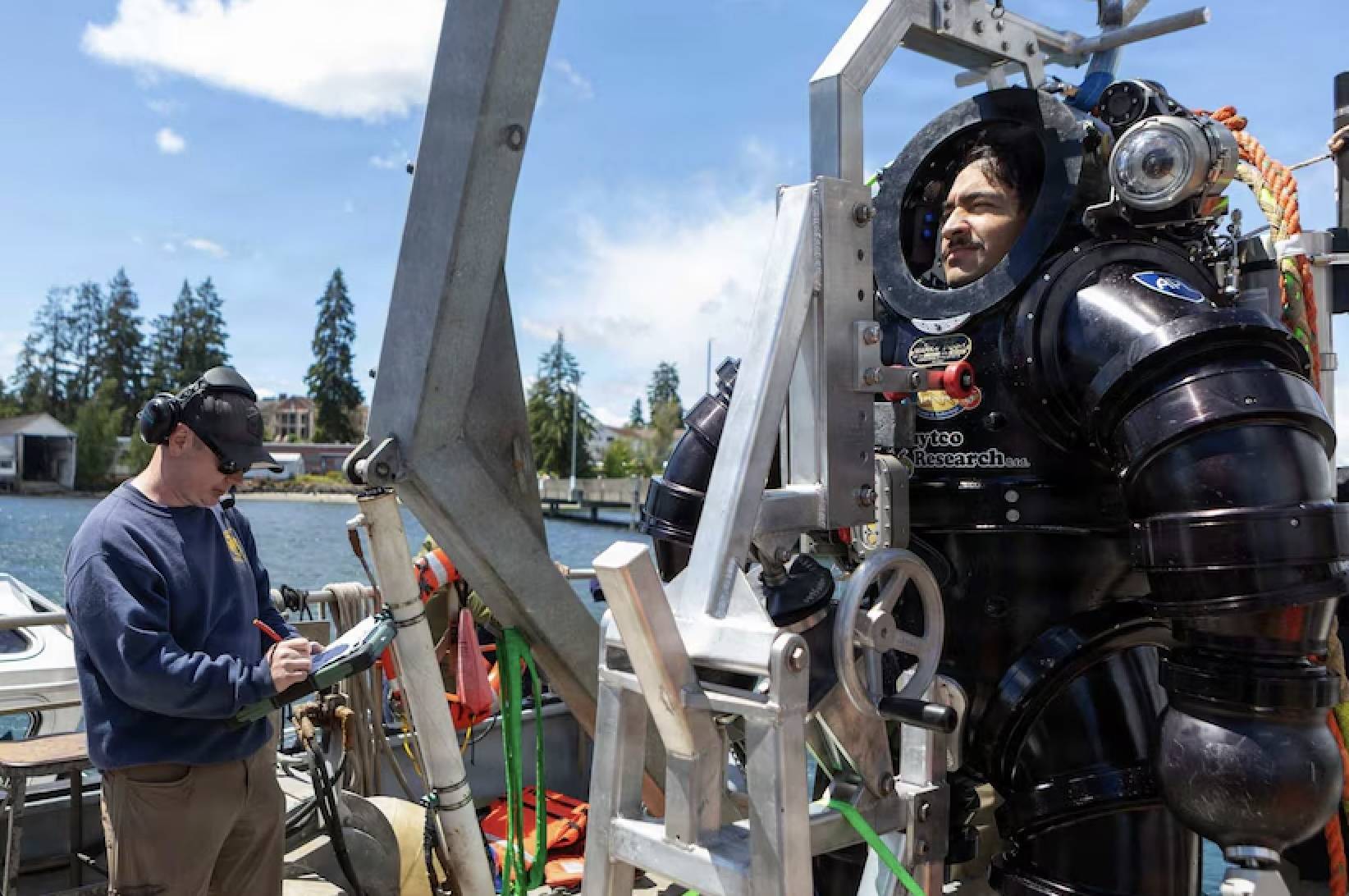
Navy Petty Officer 1st Class Andrew Turner conducts predive checks as Navy Petty Officer 2nd Class Giovanni Casteñeda prepares to test a Deep Sea Expeditionary with No Decompression suit during an exercise at Naval Undersea Warfare Center Division, Keyport, Wash., June 9, 2026. Credit: Scott Pittman, Navy
Naval Undersea Warfare Center Division, Keyport, Washington, hosted the first open water test of the Deep Sea Expeditionary with No Decompression suit in Liberty Bay, Washington, June 8-12.
The atmospheric diving system is designed to protect divers from the crushing pressure of extreme ocean depths while eliminating the need for decompression. During the weeklong evaluation, three Navy divers piloted the prototype suit to the ocean floor. The event successfully simulated critical real-world Navy missions, including deep ocean salvage, underwater rescues, explosive ordnance disposal and ship hull maintenance.
The success of the open water evaluation was the result of a collaborative effort across the defense, academic and private sectors, in partnership with Naval Sea Systems Command, the open water evaluation aimed to transition the suit from controlled facility testing into a realistic, unpredictable saltwater environment.
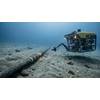
A major highlight of the evaluation was the successful recovery of an unmanned underwater vehicle that was sunk for the exercise. The divers, working in tandem with a remotely operated vehicle and topside engineers, successfully located the UUV, rigged a lifting device using the suit's mechanical grippers and secured the vehicle for recovery.
The testing exposed the suit to factors like variable visibility, limited traction and a silty/muddy seafloor, allowing the divers to assess its maneuverability. Data gathered during these evolutions will directly inform the design and performance requirements for the upcoming first-generation suit. This testing included a prototype thruster pack that enhanced the diver's speed and buoyancy, counteracting the suction effects of heavy boots in muddy terrain.
To ensure divers can perform complex tasks, the team evaluated mechanical gripper dexterity, rotational joint durability in high-particulate environments and fine motor skills. Divers successfully adapted hand pods for underwater tool usage, demonstrating the physical versatility required for salvage operations.
The evaluation also featured a newly designed, updated diver life support system. This enhanced ducting and a larger carbon dioxide absorbent volume were tested under both constant and sensor-driven variable fan speeds to optimize the diver's internal environment.


 August 2026