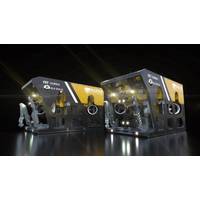
FET Books Two Work-Class ROV Order from Nigerian Oil and Gas Firm
a new bolted frame, now CNC machined and providing an improved layout both for maintenance access and tooling capability. Their through-frame-lift will increase to 4000 kg, a rise of over 30% from the EVO II.The XLX EVO III comes with updated pilot chairs and console as well as FET’s next-gen control software, ICE Unity, enabling remote operations and 24-hour support.The delivery of the ROVs is expected in May 2026.“We are thrilled to be bringing our next generation work class ROV out of the testing pool and into action off the west African coast. MPL is a reliable and longstanding customer
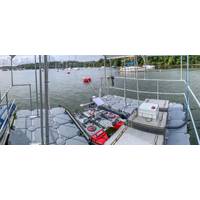
UK Project Demonstrates Autonomous Docking for Zero-Emission USVs
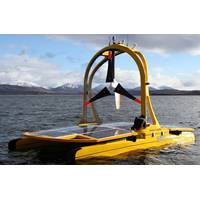
and surveillance missions in ports and harbours.In September, the ROC + DOCK system was deployed on the River Dart. A remotely monitored docking station with an automated mooring latch enabled hands-off recovery and recharging of HydroSurv’s REAV-16 USV.Deep integration between the vessel control software and the simulator allowed operators to launch, navigate and task the USV through an interface traditionally used for crewed training.The project also addresses training and skills gaps in maritime autonomy. The simulator and ROC facility create a progressive pathway from virtual training to
Robosys Wins Contract For USV Integrated Maritime Autonomy Solution
the USVs capabilities, through delivering full wireless remote control in any weather conditions from any local range mothercraft or shoreside short range, which is seamlessly switchable with the University’s Remote Operations Centre (ROC).Robosys’ flagship maritime autonomy and vessel control software, VOYAGER AI, is regarded as the world’s foremost maritime artificial intelligence (AI) software in its sphere, delivering proven advanced navigation, CADA, and decision aid solutions, to IMO Degree 4 Maritime Autonomy.Integration of Robosys’ VOYAGER AI suite into the University of
Saildrone: USVs Have Only Scratched the Surface of Maritime Security
. Using USVs not only lowers costs but avoids 97% of the carbon of a standard survey ship. "This is a cost-effective and environmentally safe way to do an important job because the subsea cable market is really taking off.”AI advances the mission All of Saildrone's command and control software is developed in-house, with a focus on vertical integration that allows tight coupling of hardware, autonomy and mission management."Our platform has real-time fleet monitoring. We can do dynamic mission updates. We're doing secure data handling and built to allow us to scale globally
FET Unveils Next-Gen Work Class ROV
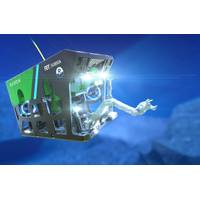
has a new frame, which is now CNC machined and provides an improved layout both for maintenance access and tooling capability. Through-frame-lift has increased to 4000 kg, a rise of over 30% from the EVO II.The XLX EVO III also comes with updated pilot chairs or console as well as FET’s latest control software, ICE Unity, enabling remote operations.“As FET’s Work Class ROVs are renowned for, the XLX EVO III is rugged and reliable, but is also equipped with cutting edge technology that enables operators to fly with poise, precision and confidence.“We are excited to see the results
VideoRay Awarded $92.6 Million US Navy Contract
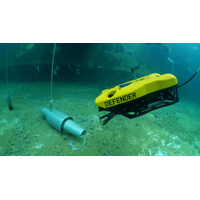
of third-party sensors, software applications, and versatile, field-swappable payload options to meet the Navy’s expanding needs for expeditionary mine countermeasure operations. Core technology onboard this platform has been developed by industry partners and includes: EOD Workspace control software and autonomy platform by Greensea IQ, Multibeam sonar and USBL positioning system by BluePrint Subsea, Doppler Velocity Log (DVL) for navigation by Nortek, and a 2-function manipulator by Eddyfi, which all combine to significantly expand vehicle capabilities while maintaining the size,
Blue Ocean Seismic Services' Robots Pass "Crucial" Tests in Loch Linne
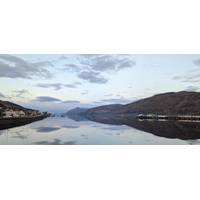
remote offshore operations, Blue Ocean Seismic Services said.The extensive dataset acquired during the trials, as well as the data from a series of successful trials held in both Loch Ness late last year and Perth, Australia earlier this year, will allow engineers to further refine the vehicle and control software and move towards the scale up to commercial operations, targeted for Q4 2024.Disrupting offshore seismicBlue Ocean Seismic Services says its technology is disrupting the offshore seismic sector to become cheaper, faster, safer, and much less carbon intensive. "The use of autonomous
Nauticus Robotics' Robotic AI Mine-Detection Project Passes First Phase at Defense Innovation Unit
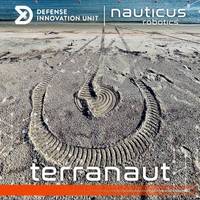
data collection and intervention services for the ocean economies, said.Nauticus said that its novel implementation included a robot capable of not only swimming, but also crawling out of the surf and onto the beach. "The solution utilizes the company’s autonomous command and control software platform, ToolKITT, and combines several mature technologies such as machine vision, autonomous mission planning, and acoustic data networking onto an amphibious robotic vehicle hull that can collect intelligence and identify potential hazards. ToolKITT, which also serves as the foundation of
Armach's Hull Service Robot Excels in Over-the-horizon Operation Trials
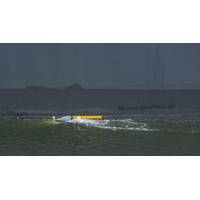
point at the pier, and make a controlled approach to the side of the ship. Once there, it was able to attach itself successfully, and travel along the ship's side, performing a short test cleaning protocol.“Peyres adds: "We continue to leverage Greensea's OPENSEA open architecture control software, fused with Armach’s On-Hull navigation solution from the HSR's [Hull Service Robot's] myriad sensors, providing rock-solid vehicle control. "We also knew that Greensea’s Safe C2, a distance operation solution also part of the OPENSEA suite, had already proved that
 August 2025