Hybrid Theory: Multi-Domain Unmanned Systems are Blurring Maritime Boundaries
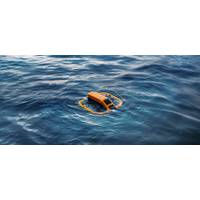
. Like HORUS, HERMES can submerge to 100 meters to evade detection or ride out severe weather. With speeds of 5 to 15 knots, and large-volume payload space, it offers a high-speed, attritable platform for contested logistics.The HERMES. Credit: SubSeaSailAnother maritime innovator, Gulfport-based Ocean Aero, has developed a first-of-its-kind hybrid autonomous platform, the Triton. Measuring approximately 4.5 meters in length and weighing 350 kilograms, its folding rigid sail, integrated solar panels, and electric drive enable months-long surface operations or dives to 200 meters for up to five days
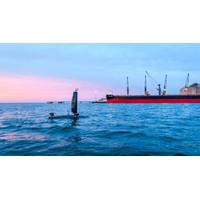
Ocean Aero to Continuously Monitor the Port of Gulfport Autonomously
On May 1, the Port of Gulfport will implement continuous autonomous subsea surveillance. Using Ocean Aero’s technology, the Triton AUSV, they will begin running ongoing scans using a variety of subsea payloads, including bathymetry, side-scan sonar, and magnetometers to produce high-resolution comparative datasets for real-time change detection. The initiative is designed to detect irregularities in both port traffic and infrastructure, a feature that Port CEO and Executive Director, Jon Nass, says has the potential to save the port millions.Triton’s monitoring will also play a
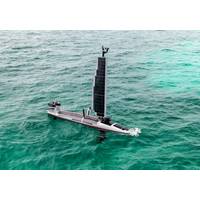
Forcys to Equip Ocean Aero's Triton AUSVs
U.K. based Forcys announced it has been selected by Ocean Aero as a payload provider for its autonomous underwater and surface vehicle (AUSV), the Triton.Completely solar and wind powered, Triton can travel at speeds of up to 5 knots and can submerge for up to 5 days at 2 knots. It can be used as a force multiplier for defense operations, offering easy logistics, launch and recovery while evading detection using autonomous avoidance and deep diving capabilities.Forcys will be supplying Ocean Aero with SPRINT-Nav Mini, said to be the world’s smallest hybrid acoustic-inertial navigation technology
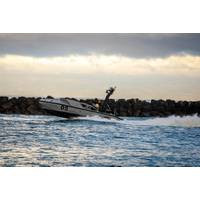
Sea Drone Warfare has Arrived, and the US is Floundering
is building several more every month, said Richard Jenkins, the company's founder."Right now, we are struggling to keep up with demand," Jenkins told Reuters in an interview. He declined to comment on how much Saildrone charges the Navy.A next-gen Saildrone Surveyor USV (Photo: Saildrone)Ocean Aero builds the autonomous Triton vessel, which can move on the surface or underwater to collect data and hunt for mines using sensors. The company, which is backed by Lockheed Martin, opened a 63,000 feet manufacturing facility in Gulfport, Mississippi last October that is capable of churning out 150
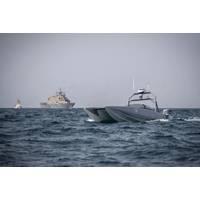
Unmanned Maritime Systems Development Accelerates
learning technologies from industry partners.Digital Horizon 2022 will feature a formidable fleet of cutting-edge platforms and technologies. The USVs taking part include Elbit Systems’ Seagull, iXBlue DriX, L3Harris Arabian Fox, Marine Advanced Robotics WAM-V, MARTAC’s Devil Ray T-38, Ocean Aero TRITON, Open Ocean Robotics Data Xplorer, Saildrone Explorer, Seasats X3 and SeaTrac SP48.Digital Horizon was a three-week event in the Middle East focused on employing artificial intelligence and 15 different unmanned systems (12 USVs and 3 UAVs), many of which operated in the region for the first
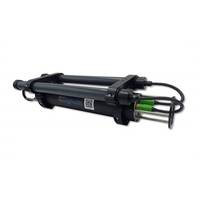
CSignum Demonstrates Capabilities of Electromagnetic RadiEM Modem at OceanBusiness
the environment and marine life," CSignum said.“We expect RadiEM to become the cable-free gateway for marine data through the surface of the water,” said Chris Brooks, CEO of CSignum. “RadiEM is already successfully deployed in a multitude of use cases from AUV/ASV (HESS and Ocean Aero) and tidal water data recovery to offshore structural and met ocean data transmission to real-time ADCP data. RadiEM has reliably sent data at a range of 28-30m via underwater modems to topside receivers transmitting at 200bps. The battery life is phenomenal, too, enabling up to 3 months on standard
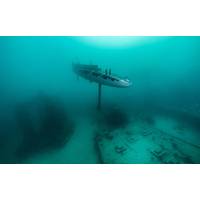
HII and Ocean Aero Partner to Expand Capabilities of Their Unmanned Systems
U.S.-based marine vehicle manufacturers HII and Ocean Aero are teaming up to advance the combined capabilities of their respective unmanned maritime platforms and autonomy software solutions. The companies recently commenced multiple, simultaneous efforts to enhance the operational reach and duration of the platforms, collaborative autonomy behaviors, shared sensor fusion and perception capabilities, and accelerated seabed-to-shore data transmission methods.“We are pleased to partner with Ocean Aero to further expand the operational capabilities of the U.S. Armed Forces, partner nations and
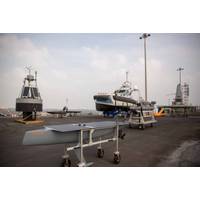
US Kicks Off Unmanned & AI Systems Integration Event in Bahrain
vertical take-off and landing systems, Aerovel’s Flexrotor and Shield AI’s V-BAT as well as Easy Aerial’s tethered UAV. The unmanned surface vessels will include the Elbit Systems Seagull, Exail DriX, L3Harris Arabian Fox MAST-13, Marine Advanced Robotics WAM-V, MARTAC T-38 Devil Ray, Ocean Aero TRITON, Open Ocean Robotics Data Xplorer, Saildrone Explorer, Seasats X3 and SeaTrac SP-48. Industry partners Accenture Federal Services and Big Bear AI will also employ data integration and artificial intelligence systems during the event, and Silvus Technologies will provide line-of-sight
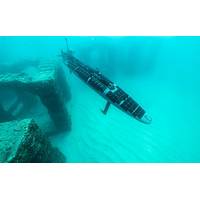
KAUST, Ocean Aero to Deploy Solar-powered AUSV in Red Sea
King Abdullah University of Science and Technology (KAUST) and Ocean Aero, a manufacturer and service provider of ocean-going Autonomous Underwater and Surface Vehicles (AUSVs) have started a collaboration which will see Ocean Aero's solar and battery-powered AUSV deployed in the Red Sea.Ocean Aero and Shelf Subsea, a service company for the marine industry, will bring the AUSVs into Saudi Arabia, which will enhance KAUST research of the Red Sea.Ocean Aero's TRITON Generation III AUSV both sails and submerges and is used for long-range ocean observation and data collection missions. "T

 December 2025