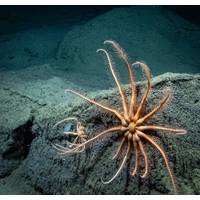
Ocean Discovery League Aims to Double Deep Seafloor Observations
first globally representative visual dataset of the deep ocean floor.The methodology behind this strategy was published in a Science Advances article titled “The Global Deep Sea Exploration Goals: A Representative Approach to Visually Observing the Deep Seafloor.” The paper describes how the target locations were selected using existing global datasets of key seafloor characteristics and outlines the impact that observing these locations could have on achieving a representative picture of deep seafloor environmental diversity.The initiative builds directly on ODL’s landmark 2025 study
Kongsberg Discovery Introduces Updated SY60 Sportfishing Sonar
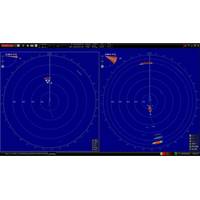
SIMRAD by Kongsberg’s SY50, the SY60 brings a series of performance upgrades, including a narrower vertical beam, greater transmitting power, and a new stabilization system. The SY60’s redesigned transducer architecture produces a sharper vertical beam, allowing operators to distinguish targets with greater accuracy and track fish more reliably near the surface and seabed. Its increased power output strengthens long‑range performance and improves the ability to follow fast‑moving or dispersed schools.A new stabilization sensor, SteadyPing, delivers faster and more precise compensation
Greensea IQ Launches Bayonet AUGV Training Simulator
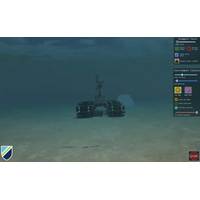
both autonomous modes of operation as well as piloting the system in open-loop modes of operation.The Bayonet AUGV simulator is designed for training scenarios and supporting operational work-ups of real-life missions. Trainers can specify environmental conditions, import geography and bathymetry, place targets, and create mission objectives. A fish-eye view in the trainer’s console allows the trainer to watch as an operator executes a mission. Realistic POV video from the AUGVs camera and simulated high-fidelity sonar data provide the operator an accurate experience while working within Greensea&rsquo
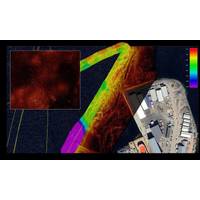
Kongsberg Discovery Launches HISAS2020 Synthetic Aperture Sonar
, reduced survey time and increased operational efficiency.For users, this means seeing more detail, detecting smaller objects, and understanding underwater environments with both greater confidence and speed — whether the task is seabed mapping, surveys of critical underwater infrastructure, or target identification.Enabling confidenceThe flexibility of HISAS2020 makes it relevant across a wide range of high value use cases.Defense operators benefit from precise seabed awareness for mine countermeasures, harbor protection, search and rescue operations, and overall maritime domain awareness. Energy
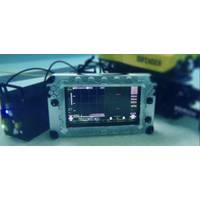
Greensea IQ Launches Combat Swimmers Command and Control Interface
Edge software framework installed. EOD Edge is a command and control suite for operators of maritime robotics. It is used to enable the supervision of autonomous systems and provides modular expansion for over-the-horizon operations, coupled control of manipulator systems, obstacle avoidance, automatic target recognition, target tracking, and advanced perception sensor processing. The controller finds additional market scalability by being robot agnostic and providing workflow support to TAK systems
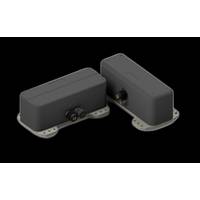
Kongsberg Discovery Expands Multibeam Echosounder Portfolio
Discovery has launched two new variants of its EM2042 multibeam echosounder, extending high-resolution seabed mapping capabilities to deep-rated subsea vehicles and naval operations.The new EM2042 DR600 and EM2042 BNS build on the existing EM2042 platform and its next-generation acoustic architecture, targeting deepwater unmanned platforms and defense environments, respectively.The EM2042 DR600 is engineered for underwater vehicles including autonomous underwater vehicles (AUVs), remotely operated vehicles (ROVs), remotely operated towed vehicles (ROTVs) and submarines. The system is depth-rated to 600
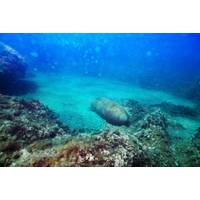
Modernizing UXO Detection: Smarter, Safer, and Built on Better Data
never been more urgent—or more complex.Before offshore wind farms or subsea cables can be installed, UXO campaigns must clear the seabed of dangerous items. These operations are essential for safety but come at a high price: vessels costing upwards of £50,000 per day, investigating just ten targets daily. Yet, recent analysis shows that only 4% of investigated targets are actual UXO—highlighting enormous potential for optimization.Smarter Target Reduction and Advanced AlgorithmsIndustry innovators are responding. Seequent, a global leader in subsurface software, is helping transform
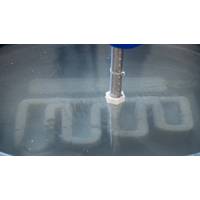
Underwater 3D Printing of Concrete Ready for DARPA Assessment
material from the bottom of the ocean would minimize the logistical difficulty of transporting large quantities of cement by ship.In September, the Cornell team successfully demonstrated to a group of visiting DARPA officials that they were getting close to meeting the agency’s high sediment target. It was a huge milestone, according to Nair.“Nobody is doing this right now,” she said. “Nobody takes seafloor sediment and prints with it. This is opening up a lot of opportunities for reimagining what concrete could look like.”The complexity of underwater 3D printing requires
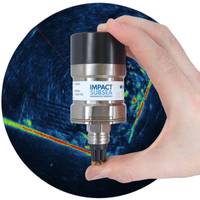
How Impact Subsea's ISS360 Series is Redefining Compact Sonar
Impact Subsea, a leader in subsea sensor technology, has continued to develop their ISS360 Imaging Sonar range.Since its debut in 2020, the ISS360 is a solution for ROV and AUV navigation and target identification, offering a replacement for legacy scanning sonar systems.A Five-Year Journey Launched in March 2020 as the world’s smallest scanning, imaging sonar, the ISS360, was designed to provide a step-change in capability for the underwater vehicle market.The ISS360 Imaging Sonar has undergone development, evolving from the world’s most compact, scanning sonar into a high-definition
 February 2026