
DNV Launches Two Standards for Floating Solar Power
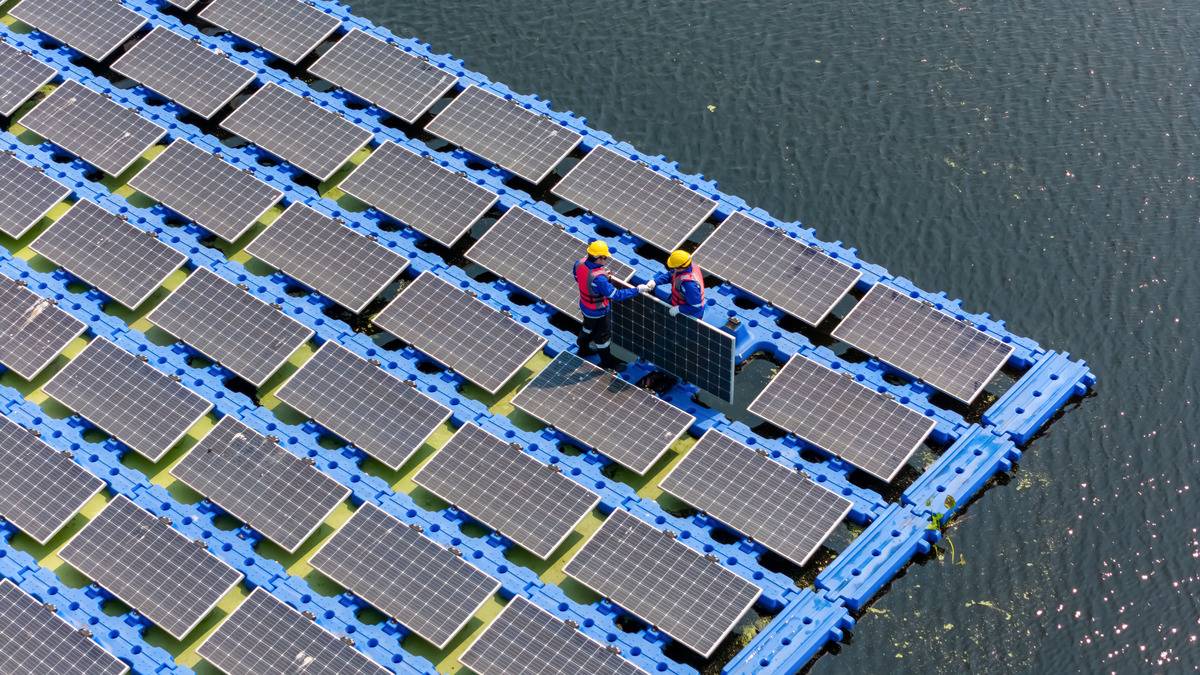
© FotoArtist / Adobe Stock
DNV, the independent energy expert and assurance provider, has published two new standards aimed at improving the safety, reliability and long-term performance of floating solar photovoltaic (FPV) systems, supporting the rapid global growth and expansion of renewables.
The new standards, DNV‑ST‑C108 Structural design of floats for floating photovoltaic systems and DNV‑ST‑E309 Station keeping of floating solar photovoltaic systems, are complemented by DNV‑RP‑0584 Design, development and operation of floating solar photovoltaic systems, the world’s first recommended practice on FPV originally released in 2021 and with an update due in June 2026.
Together, the documents provide a comprehensive and aligned framework for the design, analysis, operation and risk management of FPV systems across their full life cycle, from component to system level.
Floating solar is increasingly being deployed on inland and near‑shore water bodies as developers seek to expand renewable capacity while reducing competition for land.
As projects scale up, technical robustness and consistency in engineering practices become critical to investor confidence, insurability and long-term asset performance. Indeed, the floating solar market is expected to grow from $7.9 billion in 2026 to $9.2 billion by 2035, at a CAGR of 1.7%1
“Floating solar is moving from niche applications to large-scale infrastructure. These new standards are designed to help the industry manage risk, improve reliability and enable innovation while maintaining appropriate safety margins,” said Ditlev Engel, CEO, Energy Systems at DNV.
The introduction of the two new standards positions the RP as complementary system-level guidance rather than a primary design-level reference.
“The principles and terminology used across the two standards are aligned, providing industry stakeholders with a coherent and consistent set of guidance documents for floating solar photovoltaic systems.
“By creating a common technical language and a clear link between component‑level requirements and system‑level guidance, DNV is helping developers, owners, insurers and regulators work from the same foundation,” added Daniel Pardo Tovar, Global Lead Floating Solar, Energy Systems at DNV.




 August 2026