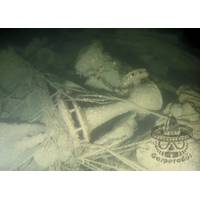
Wreckage of USCG Cutter Tampa Discovered Off Cornwall, United Kingdom
archival images of the deck fittings, ship’s wheel, bell , weaponry, and archival images of the Tampa.”The Coast Guard is now developing plans for underwater research and exploration in coordination with its offices of specialized capabilities, historians, cutter forces, robotics and autonomous systems, and dive locker.Additional information about the Tampa’s legacy can be found here
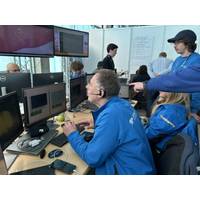
Teledyne Participates in 2026 SeaSEC Challenge Weeks: DATA2SEA
and equipped with a PAM node as well as Teledyne Marine’s SeaBat F50 and SeaBat T51 multibeam imaging sonars, enabling mobile detecting and scanning of intruders or underwater objects on the seabed and in the water column. This solution highlights the growing role of unmanned and autonomous systems in enhancing maritime security and awareness.A shore-based Teledyne FLIR thermal imaging camera provides monitoring of surface activity, completing a full multi-domain situational awareness picture.SeaSEC Challenge #6: Harbour ProtectionThis final challenge requires the detection of all traffic
SeaBot Maritime, GRi Simulations and Frontier Robotics Feature Human-AI Autonomous Maritime Training Platform
Across offshore energy, commercial maritime and defense, deploying people and equipment into subsea environments remains complex, specialist and high-risk work, with individual campaigns often exceeding $130,000 per mission. As autonomous systems become central to maritime operations, SeaBot Maritime, GRi Simulations Inc. and Frontier Robotics have delivered a new simulation platform that enables operators to safely train and validate AI-enabled systems before deployment at sea.Developed as part of a UK government-funded initiative awarded by the AI Security Institute, the platform allows autonomous
Teledyne Marine Wins UK Royal Navy Contract for AUVs and Floats
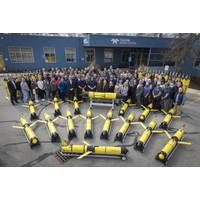
supplier able to guarantee seamless interoperability, security compliance, and mission readiness into the Current RN Glider Fleet.”Since 2015, Teledyne has supported the Royal Navy’s oceanographic and environmental monitoring requirements through Slocum gliders, APEX floats and Gavia autonomous systems designed to operate reliably in demanding operational conditions. Teledyne’s unmanned systems are widely used by naval, commercial, and scientific organizations worldwide for ocean observation and environmental data collection

Advanced Navigation Raises $110M Series C to Support Increased PNT Technology Demand
Advanced Navigation, a leader in navigation and autonomous systems, announced it has successfully raised $110 million in a Series C funding round. The raise marks a shift in the global autonomy race as national demand for alternative Positioning, Navigation, Timing (PNT) technologies reaches an all-time high.The round was led by Airtree Ventures, with participation from Quadrant Private Equity and the National Reconstruction Fund Corporation (NRFC). These investors join a cohort of existing backers including Main Sequence, KKR, In-Q-Tel, Alpha Intelligence Capital, The Hon. Malcolm Turnbull AC
Greensea IQ Launches Bayonet AUGV Training Simulator
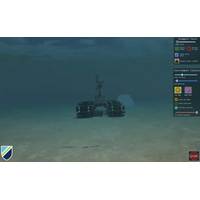
Greensea IQ, a leader in subsea robotics and autonomous systems, announced the launch of a new simulator designed to help operators learn, practice, and refine their skills using the company’s Bayonet Autonomous Underwater Ground Vehicles (AUGVs).Developed in-house, the training simulator is built in a virtual game environment providing a realistic experience with an accurate physics engine. The game engine integrates with the operator’s console of the Bayonet robot, taking the place of a live robot, and simulates a fully operational system. Operators interact with the simulated system
SeaBot Maritime, GRi Simulations, Frontier Robotics Deliver Human-AI Autonomous Training Platform
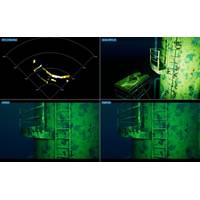
Across offshore energy, commercial maritime and defense, deploying people and equipment into subsea environments remains complex, specialist and high-risk work, with individual campaigns often exceeding USD$133,000 (£100,000) per mission. As autonomous systems become central to maritime operations, SeaBot Maritime, GRi Simulations Inc. and Frontier Robotics have delivered a new simulation platform that enables operators to safely train and validate AI-enabled systems before deployment at sea.Developed as part of a UK government-funded initiative awarded by the AI Security Institute, the platform
Rising expectations: A deep dive on underwater vehicles
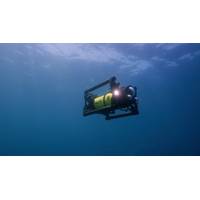
is a growing request, if not requirement, in the subsea industry and beyond to enable work to be completed faster and over a longer period than when operated by a human. Simply put, more data points can be collected, processed and visualized. In offshore, exploration and defense applications, autonomous systems remove a level of risk by reducing dangerous or extreme situations. What's crucial, Fotheringham emphasized, is that underwater vehicles are capable of autonomy beyond sea trials. “Autonomy is expected to function in real-world conditions, not just controlled scenarios.”Underwater
Greensea IQ Launches Combat Swimmers Command and Control Interface
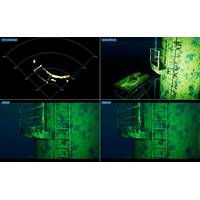
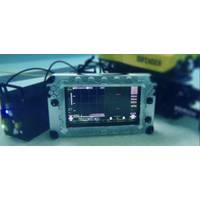
hard drive, supporting secure data handling and advanced mission processing. The new product is typically deployed with Greensea’s EOD Edge software framework installed. EOD Edge is a command and control suite for operators of maritime robotics. It is used to enable the supervision of autonomous systems and provides modular expansion for over-the-horizon operations, coupled control of manipulator systems, obstacle avoidance, automatic target recognition, target tracking, and advanced perception sensor processing. The controller finds additional market scalability by being robot agnostic and

 February 2026