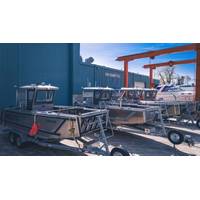
Hike Metal Products, HydroSurv Partner to Deploy USV Platforms Across US, Canada
Hike Metal Products Limited has signed a Technology Licensing Agreement with HydroSurv, establishing a partnership that will see Hike Metal manufacture, market and support HydroSurv’s portfolio of Uncrewed Surface Vessel (USV) platforms across Canada and the United States.The agreement marks another step in HydroSurv’s international deployment of commercially proven Rapid Environmental Assessment Vessel (REAV) technology, through an established North American manufacturing partner. As demand for uncrewed maritime technology continues to grow across North America, the partnership
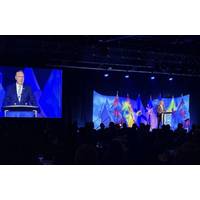
The Maritime and Arctic Security and Safety conference (MASS) highlights Atlantic Canada's unique capabilities in defense and technology
The 13th annual Maritime & Arctic Security & Safety Conference (MASS), hosted by the Atlantic Canada Aerospace & Defense Association (ACADA), and sponsored by Saab Canada, Inc., is currently underway this week in St. John's, Newfoundland and Labrador.ACADA represents Atlantic Canada's aerospace and defense industry and promotes the region as a globally recognized hub of aerospace and defense excellence. (Atlantic Canada includes the provinces of New Brunswick, Nova Scotia, Prince Edward Island and Newfoundland & Labrador.)With 600 participants, this year's MASS conference
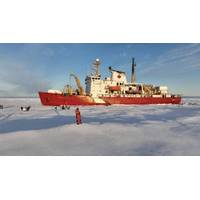
Multidisciplinary Scientific Expedition Sets Sail July 10 Aboard the CCGS Amundsen
CCGS Amundsen. Until November 25, research teams will conduct operations across several strategic regions of the Canadian Arctic and Greenland, collecting samples and data to better understand the environmental and ecological changes affecting the North. The expedition will also help strengthen Canada's scientific presence in Arctic waters.Coordinated by Amundsen Science in partnership with the Canadian Coast Guard, this 139-day expedition will enable research teams to explore several key regions, including the Labrador Sea, Baffin Bay, the Northwest Passage, Nares Strait, the Tuvaijuittuq
Kongsberg Maritime, BCIT Invest in Future Marine Innovation Simulation Centre of Excellence
(BCIT) announced an investment that will establish the Marine Innovation Simulation Centre of Excellence (MISE) in British Columbia. The initiative is designed to strengthen maritime innovation and skills development, support ongoing research and development, while building on key objectives outlined in Canada’s Defence Industrial Strategy.The partnership and subsequent investment are enabled through the Industrial Technological Benefits (ITB) policy, and in support of KONGSBERG programs in Canada. This investment will directly support improved facility infrastructure, onboarding of applied research
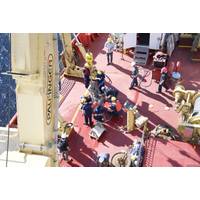
Breaking the Ice on Arctic Research
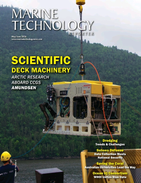
Deck machinery, such as winches, launch and recovery systems, and cranes, can transform almost any vessel into a floating laboratory, supporting the technology necessary for scientific data collection and analysis. The Canadian Coast Guard Ship (CCGS) Amundsen is no exception, as Canada's only icebreaker equipped with scientific facilities in support of national and international multidisciplinary research programs. On board, the vessel boasts 65 scientific systems, 22 fixed and portable laboratories, and 300m2 of wet and dry workspace to perform chemical and biological experiments, analyze
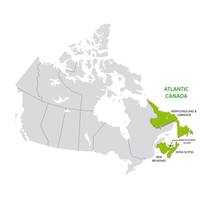
AtlantiCan Growth Partners Announces Launch, Targets $100m Blue Economy Fund
AtlantiCan Growth Partners (AGP) officially announced its launch as a long-term investment platform dedicated to scaling high-potential businesses across Atlantic Canada. Operating with an operator-led model, the firm partners with founders, operators, and ecosystem leaders in sectors where the region holds a distinct global competitive advantage.Atlantic Canada represents a major growth opportunity within Canada's venture capital landscape. Over the past five years, the region has attracted just 2% to 3% of national venture capital, with Ontario and Quebec capturing the vast majority of deployment.
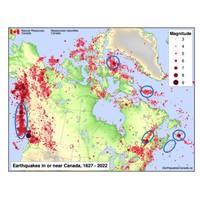
Ocean-Bottom Seismometers Play Crucial Role in Offshore Sensing
Much of central Canada lies on very old, stable bedrock with little seismic activity. In contrast, the county’s coastlines face far greater seismic risk, particularly (but not limited to) the west coast. Of greatest concern is a major subduction zone off Vancouver Island, where tectonic plates pushing together suggest a large earthquake is due.Canada is all too familiar with the impact of offshore earthquakes. The magnitude 7.2 Grand Banks earthquake of 1929 triggered one of the most destructive tsunamis ever recorded in the country, devastating coastal communities in Newfoundland and Cape Breton.
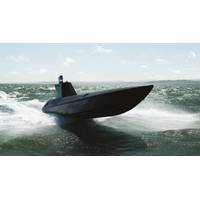
Davie and Kraken Team Up on Autonomous Vessels
. Davie brings scale, advanced shipbuilding infrastructure and a record of delivering mission-critical vessels on time and on budget.”Lindsey Kettel, President, Davie Shipbuilding, said: “By combining innovative technologies with Canadian industrial expertise, this collaboration exemplifies Canada’s ‘Build, Partner, Buy’ policy. Bringing together Kraken’s advanced autonomous systems with Davie’s scale, capacity and shipbuilding expertise, we can establish Canada as an autonomous maritime leader, while strengthening Québec’s role at the heart of Canada&rsqu
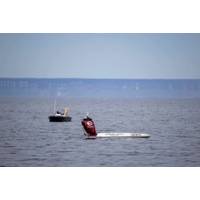
COVE, The Launch Support National Autonomous Maritime Defense Field Trials
, acoustic sensors, and information systems to provide a realistic, system-integration-level environment for detecting and tracking underwater targets.With a focus on underwater domain awareness, the CATS-M trial series is part of an ongoing collaboration between COVE and Defence Research and Development Canada (DRDC) to support maritime testing and validation of innovative technologies with industry partners. This CATS-M trial integrated solutions from several COVE ecosystem partners, including Open Ocean Robotics, JASCO Applied Sciences, and General Dynamics Mission Systems-Canada.The CATS-M trial series
 February 2026