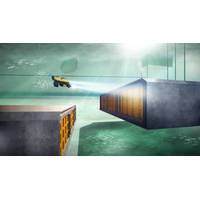
MacArtney Provides Subsea Infrastructure Solution at Fehmarnbelt Fixed Link
sequence. This configuration supplies power and data to pumps and sensors within the tunnel element. Once positioning is complete, the Retrieval Frames are disconnected and recovered by a remotely operated vehicle (ROV).Supporting this is a broader infrastructure comprising umbilicals containing power, Ethernet, and coax cables, including integrated SubConn connectivity that enables power and data transmission between topside systems and tunnel elements.The system also incorporates control units for power distribution and data handling, MacArtney stress terminations, armadillos, mounting frames, NEXUS
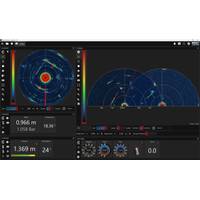
Impact Subsea Releases seaView 3.2
to setup serial over lan connections.A new Communications Monitor feature has also been added. This acts as a terminal application, allowing the data flowing into or out of any port to be viewed and monitored. For survey applications where data can be output to various third-party systems via serial or ethernet, this provides a simple method to check all telemetry quickly.An alarm feature has been added to the Altimeter and Depth sensor applications, allowing a visual and audio alarm to be set for exceeding a set altitude or depth. For example, this allows ROV operators to be quickly alerted to a low altitude
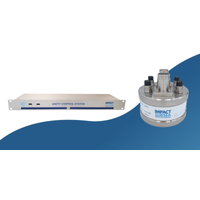
Impact Subsea Unveils Topside Control System, Advanced Subsea Multiplexer
range of underwater instrumentation, including sonars, profilers, altimeters, depth and Attitude and Heading Reference Systems (AHRS). Rated for depths up to 6,000 meters, it is equally suited for shallow and deep-water applications.The system features four versatile communication ports, each supporting Ethernet, RS232 or RS485 protocols. To ensure scalability, users can daisy-chain multiple seaMux units together or leverage RS485 multidrop and y-splice cables to host multiple serial sensors on a single port. Each port is paired with a software-controllable 24VDC power output featuring real-time power
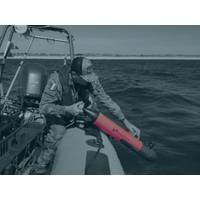
SEABER MARVEL Micro-AUV Maps Beach for Littoral Reconnaissance
covert pre-assault reconnaissance in contested environments.Engineering Challenges and Development ProcessIntegrating this sonar into a 12-centimeter vehicle required a complete redesign of the MARVEL's payload architecture: mechanical miniaturization, a dedicated data-flow management board, dual Ethernet interfaces, and significantly expanded onboard storage.Maintaining full software interoperability with PingDSP's processing suite despite the transition to an embedded architecture was among the most complex challenges of the program, requiring multiple joint test and validation cycles conducted

RAD Launches Autonomy Core Remote Vessel Control Solution
RAD supplied hardware or integration with existing customer infrastructure.The Autonomy Core is designed for rapid deployment and provides the following interfaces: 2 × RAD Bus 1 × DroneCAN (compass/GPS) 1 × External autonomy system via embedded Autonomy Gateway3 × Ethernet Operators can easily enable Degree 3 autonomy: fully remote vessel control without onboard crew. The DroneCAN interface supports compass and GPS integration, while the system’s modular design ensures flexibility across a wide range of vessel types and configurations.A key feature of the
Klein Marine Systems Launches MANTIS UUV Side Scan Sonar
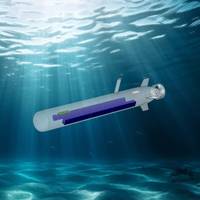
This approach helps reduce system footprint, lower size and power demands, and preserve valuable vehicle payload space.MANTIS UUV is designed to operate at higher speeds across all ranges, while processing sonar data onboard in real time so operators and autonomous systems can act on information faster. Ethernet-based connectivity simplifies integration with modern UUV platforms and supports real-time review, playback, and analysis workflows

EdgeTech Introduces the Trace Side Scan Sonar for Micro-UUV, ROV, USV
combination for range and resolution. With an average power draw of only 7-10W the 12-24 v DC system has been optimized for size, power and weight. Integrators can choose RS232 communications for navigation devices and other sensors. External triggering is also available. The Trace system has an ethernet interface to connect to the host platform and comes with a common EdgeTech command and control interface. EdgeTech’s sonar data is streamed from the Trace system for storage on the host platform.
Nortek Launches Generation 2 Vector Velocimeter
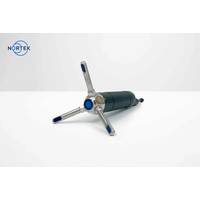
to the Vector, and compatibility with multiple battery canister options removes the need for internal batteries and allows users to choose a power solution appropriate for their application.Additionally, the Generation 2 Vector includes an interface box, allowing the instrument to communicate via both Ethernet and serial using a single cable. Finally, following Nortek’s tradition, the Generation 2 Vector offers an LED which blinks at the user-defined sampling rate while collecting data, providing peace of mind during deployment.Modern electronics and broadband processing improve the instrument&rsquo
Upscaling Power Subsea: Cables and Connectors
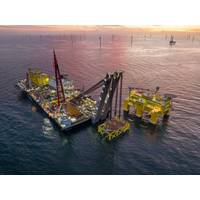
control connectors and HV connectors for production and processing are also under development.Demand for greater subsea connectivity is pushing the cable and connector market forward. Hardisty says big data is being utilized subsea to improve well efficiency and economic performance. This trend requires ethernet and fiber optic products. “Recently, we completed a project that involved installing a fiber optic subsea network to facilitate communication between onshore locations and multiple offshore oil and gas production units.”There is also a transition towards all-electric trees. Siemens Energy
 August 2026