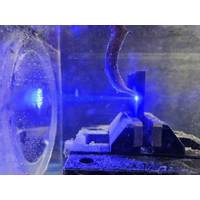
Bright Prospect: Blue Lasers for the Deep Sea
From cutting and drilling to paint stripping and removing maritime fouling, underwater tasks in the maritime environment are as numerous as the grains of sand on the beach. Some of these applications are carried out at depths of several thousand meters. A new laser system based on blue diode lasers now promises a contact-free, low-maintenance, and cost-efficient solution for a wide range of underwater operations.Whether in the maintenance of offshore platforms, the decommissioning of old oil rigs, or the inspection of underwater structures, the demands for precision, efficiency, and environmental
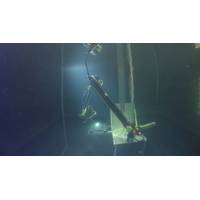
AI Goes Subsea: Autonomous Welding Robot Debut
steps will focus on transitioning the technology from controlled environments to real-world harbor conditions. Salt water, waves and currents introduce new variables, while increased pressure at depth places higher demands on component sealing and durability. Future development will also integrate a laser system to remove welding slag, further improving seam quality and operational reliability.If successful, MARIOW could mark a turning point for subsea maintenance — shifting underwater welding from a diver-limited craft to a scalable, AI-driven industrial process.Welding torch and stereo cameras
Quantum Sensor to Boost GPS-Free Navigation
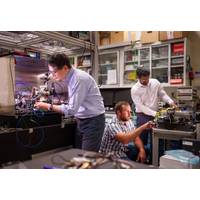
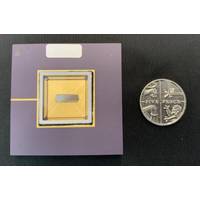
to reduce its size, weight and power needs. They have already replaced a large, power-hungry vacuum pump with an avocado-sized vacuum chamber and consolidated several components usually delicately arranged across an optical table into a single, rigid apparatus.The new modulator is the centerpiece of a laser system on a microchip. Rugged enough to handle heavy vibrations, it would replace a conventional laser system typically the size of a refrigerator.Lasers perform several jobs in an atom interferometer, and the Sandia team uses four modulators to shift the frequency of a single laser to perform different
Partners Developing Underwater Single Photon Imaging System
viable subsea mapping system and consists of: Sonardyne International Ltd — with over 50 years expertise in the provision of underwater positioning, sensing, and imaging systems; leading the project, system integration and testing.Fraunhofer UK Research Ltd — are developing the laser system and environmental testing.RedWave Labs Ltd - are designing and building the rugged and compact control electronics for the 100 pico-second pulsed laser source.Photon Force Ltd - are developing a next-generation 1D SPAD array sensor and accompanying FPGA for onboard processing targeted at imaging
Expedition Yacht Deploys Falcon as a 'Rescue Robot'
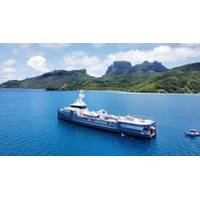
is a proven commercial choice, so fits their criteria, “and it makes sense because we already have a Falcon aboard another vessel in our fleet.”For Dapple, the Falcon is equipped with an extensive range of technology including HDTV cameras, a multifrequency scanning sonar, multibeam sonar, laser system and an eventing suite. It also comes with both a three jaw and a five-function manipulator, each with rope cutters, along with hydraulic cable cutter and rotary cleaning brush.Although the Falcon’s key role is recovery of Dapple’s submersible, for general diving safety the Falcon can
Aquaculture: Norwegian Researchers Work on 'Revolutionizing' Fish Farming
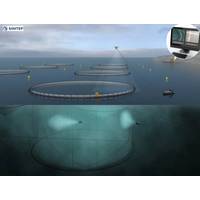
; the net as it moved along the cir-cumference of the cage – and that indeed turned out to be the case. The DVL is part of a package of navigational aids, which Walter Caharija describes as a “sensor fusion”. Ultra-short baseline acoustic positioning (USBL), compass readings, a laser system and the on-board camera all contribute location data. But, in terms of maintaining distance from the cage net, it is the DVL that does the work. Caharija says the Nortek DVL has done the job well. The team used laser measurements to verify those from the DVL and they
Falcon ROV Chosen for Project off West Africa
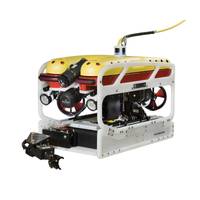
Integrated Services, said, “We ordered a survey customized Falcon ROV to support our subsea inspection / installation projects in West African waters.”The customized survey suite on Geocadinal’s Falcon includes a Digital Edge HDD dual channel recording and eventing system, a dual laser system for video survey and measurement, and a Tritech sonar.The vehicle also comes with five function hydraulic and single function manipulators, a rotary wire cleaning brush kit, cathodic potential probe kit and Cygnus ultrasonic thickness gauge. Also included is a Falcon running lock system.The Falcon
Kraken Wins Canadian Government Contract
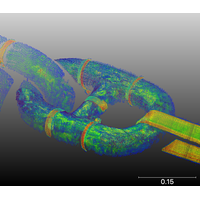
underwater laser products require a combination of a high-grade navigation payload for motion correction and require a larger stable ROV. Other market solutions for subsea 3D asset reconstruction are based on photogrammetry and inherently have less precision and range than Kraken’s SeaVision 3D laser system. We are confident that SeaVision offers a superior price and performance value proposition.&rdquo
Flying new Routes Subsea
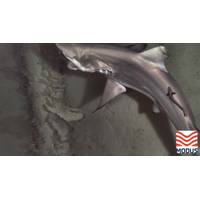
by inaccuracy caused by positioning tolerances. “Because of these systems the AUV can, in effect, see the pipeline, it means that USBL aiding isn’t always required to perform a pipeline inspection, enabling autonomous operations away from support vessels,” says Ward. “The CathX Laser system provides a very high-resolution point cloud of the pipeline and adjacent seabed. The Laser and MBES point clouds were combined in post processing and used to assess position and possible freespans. The very high resolution obtained from the laser system makes it suitable for spool deflection and
 August 2026