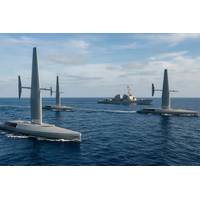
Saildrone Introduces High-Endurance Anti-Submarine and Strike USV
at Force Technologies’ tow tank in Copenhagen, Denmark. Many months of testing and evolution on a 1/7th-scale model verified propulsive power requirements and seakeeping in conditions up to full speed in Sea State 5. Only through diligent physical tank tests can CFD results be verified and propulsion systems be optimized to deliver guaranteed performance at full scale.Spectre will support containerized payload integration to accelerate deployment and integration into the modern fleet seamlessly across theaters, providing a world-class suite for undersea sensing and response. The USV will accommodate
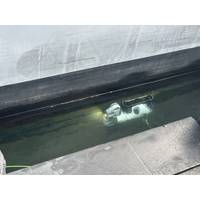
Green Tech: Rise of the [Hull Clening] Robots
to evaluate the system’s effectiveness as part of a broader push to integrate commercial technologies into military operations.Biofouling creates drag that increases fuel consumption and reduces vessel performance. Removing that buildup can restore efficiency while reducing strain on propulsion systems and extending the life of antifouling coatings.During the demonstration, the robotic system cleaned the vessel’s hull in approximately six hours. By comparison, a traditional diver-based cleaning operation can take up to a week. The robotic approach also requires fewer personnel, allowing
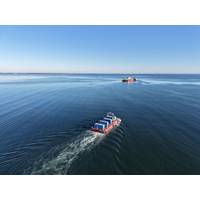
Blue Water Surpasses 1000 Hours of Ocean-Based Testing
while also including the addition of fuel polishing, electric power generation, and a full sensor suite.Meeting the Navy's VisionAs the Navy expands its fleet of uncrewed ships to execute transoceanic missions, vessels will need to remain at sea unmanned for months at a time. Robust engine and propulsion systems are essential building blocks for the hybrid fleet. If a ship can’t make way, nothing else matters. While previous Navy testing focused on the 720-hour baseline mandated by Congress in 2021, Blue Water set out to push beyond this threshold and validate their systems under more demanding
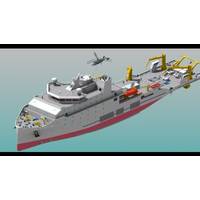
Kongsberg Maritime to Supply Rim-Drive Thrusters for Indian Research Vessel
precise manoeuvrability, ideal for sensitive scientific missions.The thruster package comprises two RD-AZ2600 azimuth thrusters, two RD-TT1600 tunnel thrusters, and the MCON control system.This contract marks a key milestone for Kongsberg Maritime: it takes the company past 100 units for rim-drive propulsion systems worldwide, a technology that was first launched commercially ten years ago. Since its introduction, Kongsberg Maritime’s rim-drive solution has become the benchmark for silent, reliable propulsion in research, naval, and specialised commercial vessels.The azimuth thruster features a six-bladed
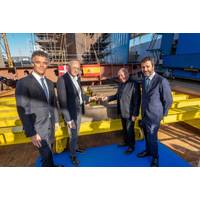
Freire Shipyard Celebrates Keel-Laying of Dana V Research Vessel
for research and education.Successor to the Dana IV, the Dana V was designed by the Knud E. Hansen A/Sconsortium, Odense Maritime Technology A/S and Naval Architects, with environmental sustainability at its core. The vessel can operate on either biodiesel or electric batteries, switching between propulsion systems as mission requirements dictate, particularly for operations demanding silent navigation.Dana V will be a multidisciplinary research platform including research on fish stocks, marine ecosystems, ocean currents, and biodiversity variations. The design allows for studies on the interactions
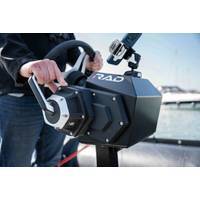
RAD Propulsion Introduces New Partnerships Across Three Key Regional Markets
RAD Propulsion, a leader in electric marine propulsion systems, announced the expansion of its international dealer network with new strategic partnerships in the Netherlands, India and Japan. Energyboats will serve as RAD's official dealer in the Netherlands, focusing specifically on the Benelux region. Energyboats specializes exclusively in 100 percent electrically powered boats and works only with manufacturers that take the electric motor as their starting point. "In our view, only then can a fully-fledged alternative to the traditional combustion engine be created,"
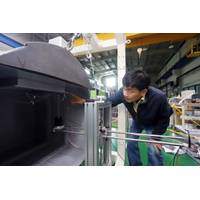
KIMM Cracks the Code for Underwater Radiated Noise Prediction
4 dB.The project was conducted jointly with defense contractor LIG Nex1 and was supported by the Defense Acquisition Program Administration and the Defense Rapid Acquisition Technology Research Institute under the project titled “Hull-Attached Sensor-Based Monitoring Technology for Naval Propulsion Systems.”Schematic diagram of the underwater noise prediction algorithm.Image Credit: Korea Institute of Machinery and Materials (KIMM
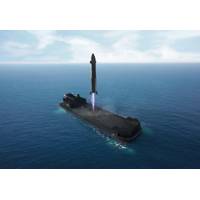
Rocket Lab to Convert Barge for Rocket Landings at Sea
be modified to specialized ocean landing platform for rockets returning to Earth.Rocket Lab acquired the Oceanus barge from New Orleans-based, private marine transportation company Canal Barge.The barge, renamed Return on Investment, will be customized to serve as an at-sea landing platform with propulsion systems to maintain the platform’s target position and thermal protection systems to conserve electrical and other support equipment installed on the deck.Expected to enter service in 2026, the 400 ft (122 m) modified barge for Neutron rockets landing will support greater space access for national
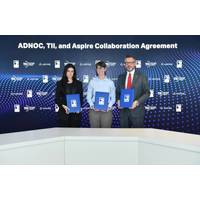
ADNOC Targets Quantum Technology for CCS
signed their first research and development agreement with ADNOC to tackle critical challenges in carbon storage monitoring and battery optimization using quantum technology.The project marks the first milestone in a wider collaboration that will include joint initiatives in autonomous robotics, propulsion systems and cutting-edge technologies for renewable and sustainable energy.By combining TII’s expertise in advanced quantum sensing, ASPIRE’s strategic vision, and ADNOC’s expertise in energy solutions, the partnership will explore how the technology can be scaled for real-world impact

 February 2026