
Digging Deeper: Challenges and Trends in the Dredging Industry
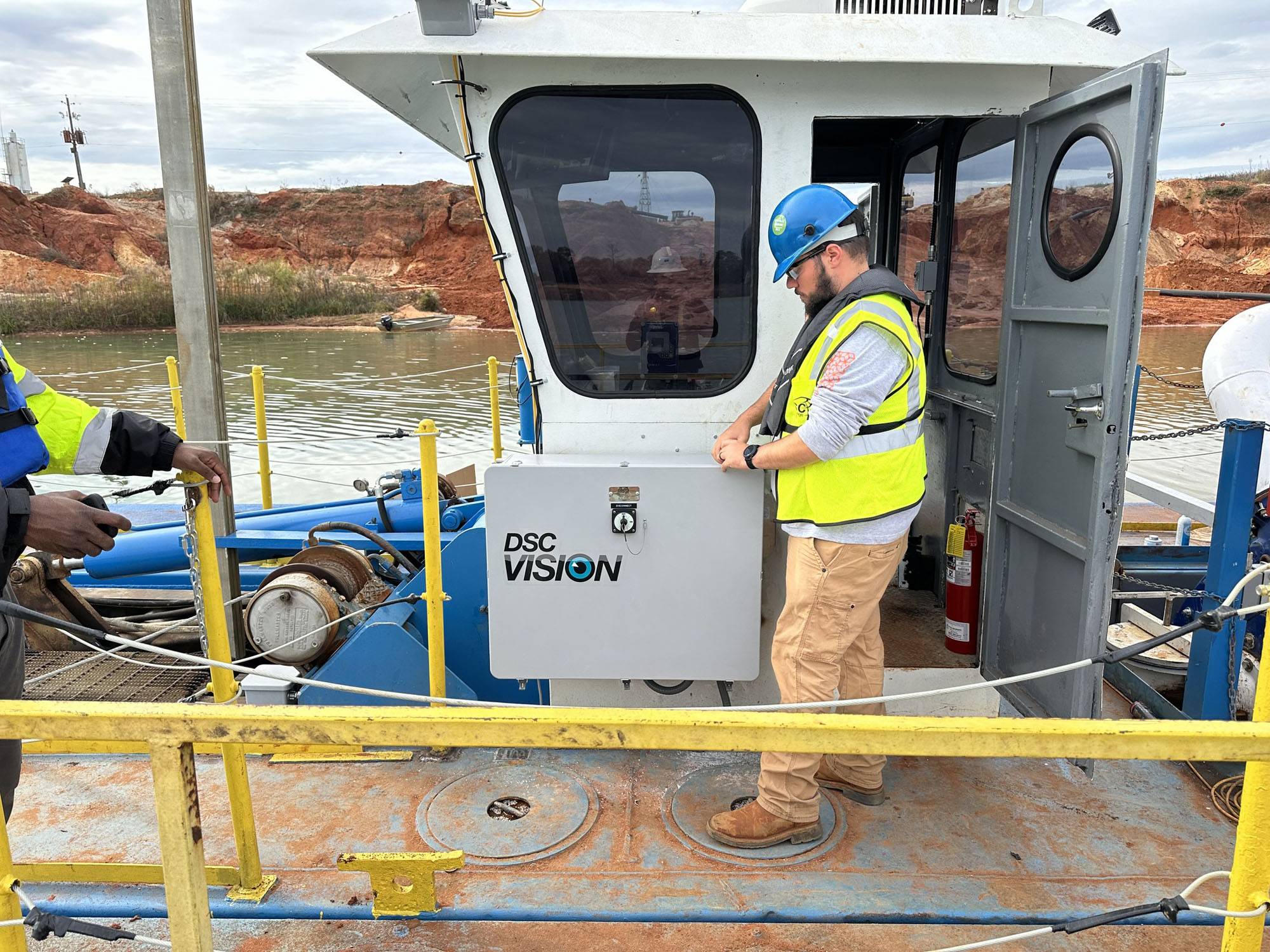
Credit: DSC Dregde
Dredging, like all sectors of the maritime industry, is experiencing rapid evolution, accelerated by increased demand and diverse challenges. Projects for waterways, infrastructure and submerged utilities grow more complex every year, and thus dredging companies must meet industry needs while ensuring awareness of and compliance with all relevant safety standards.
The problem(s)
The obstacles facing the dredging industry are not brief, nor are they simple. They range from submerged utility strikes and infrastructure protection to workforce shortages, injury prevention, regulatory coordination and navigational safety. Overall, the common denominator is awareness—of solutions, regulations and most importantly, our surroundings underwater.
One of the biggest challenges in dredging has been the inability to see the work area below the dredge. Operators have traditionally relied on experience, machine response and indirect indicators to guide their work, said experts at DSC Dredge. Even the best technicians are often working without a clear view of what is happening below the waterline or an easy way to track performance beyond what is directly in front of them.
Projects are also becoming progressively more dangerous, as post-Panamax ship sizes have increased, requiring ports and harbors to deepen channels. “Maintaining ever deeper channel depths requires dredgers to dig deeper and deeper, removing overburden material, originally considered as protective to buried pipelines, power transmission lines and fiber optic cable runs,” said Lou Nash, general manager at Measutronics. “As a result, dredge cutterheads, clamshell crane and excavator buckets are, by necessity, operating in close proximity to submerged hazards unseen (and in some cases unknown) by the machine operator.”
Incidents can be deadly and those in the water are more costly. “Awareness of the machine cutting tool's location relative to submerged hazards or infrastructure must not get ‘lost in the noise,’” he emphasized.
In addition to more dangerous projects, operators are also being asked to improve key metrics simultaneously. “Projects are getting more complex, but there is also pressure to work even more efficiently, deliver accurate results, reduce fuel use and keep environmental impact as low as possible,” explained Natasja Verboom, sales manager for survey systems, Europe and Africa, at Teledyne Marine. “It is no longer just about completing the project; it is about getting it done in a smarter and more controlled way.”
“Operators are under pressure to minimize over-dredging, reduce fuel consumption, and meet strict regulatory requirements, while still maintaining production targets,” added experts from HYPACK. “At the same time, many projects involve complex environments and require integrating data from multiple systems.”
Although technologies are available to increase situational awareness while dredging, and to complete work faster and more efficiently—without jeopardizing safety—Nash feels that the industry is still behind. “It is a known fact that the construction industry has historically been a laggard in the adoption of technology in comparison to other industries,” he said. “It has been my observation that marine contractors and dredgers lag the construction industry by a number of years.”
The technology
Despite vast industry challenges and the feeling of being behind, numerous technologies are available, ranging from sensors to sonar to software.
Teledyne's PDS dredge guidance systems combine software with positioning and motion sensors to track the dredge and individual components in real time, explained Verboom. “PDS shows these movements against the seabed model, the design model, set limits or any objects that need to be avoided. It gives the operator a complete overview what is happening underwater.”
The company also offers a range of sonars, including Teledyne RESON SeaBat multibeam echosounders and Teledyne BlueView imaging sonars, which are ideal for safe work around pipelines or other subsea objects. SeaBat provides dredge operators with seabed depth information at all points in a project, while BlueView adds another layer of visibility underwater, working like an acoustic camera that is less affected by murky water than a standard camera.
 Teledyne offers a range of sonars in addition to their PDS dredge guidance system. Credit: Teledyne
Cerulean Sonar employs similar imaging and bathymetry products, including the Omnican 3D, which combines side scan and multibeam data acquisition. “Users are provided with rapid dense data collection (3D point cloud) as well as overlayed imaging for real-time assessment and the ability to post process all within our proprietary software, SonarView,” explained CEO Damian Hennessey.
DSC Vision, according to exerts at DSC Dredge, combines sonar technology with positioning, giving operators a visual understanding of the dredging environment as they work and the ability to adjust in real time. When it comes to training, new operators can learn faster with a visual reference of the work area, rather than relying entirely on trial and error.
While DSC Vision monitors what is happening below the water, Dredge Rx focuses on the dredge itself. The latter is a remote monitoring system that provides operators, management and support teams with access to real-time dredge data, including production, position and system alarms. This level of access enables teams to stay connected to operations whether they are onboard or offsite. It also allows DSC’s product support team to connect remotely to assist with troubleshooting, helping reduce the need for travel and supporting faster resolution when issues arise. Historical production data, equipment hours, alarms and system activity can all be reviewed, giving teams better visibility into performance and usage.
 Operator view. Credit: DSC Dredge
 Live view of DSC Vision. Credit: DSC Dredge
HYPACK offers DREDGEPACK, a software solution designed to support a range of dredge types, including cutter suction, crane (clamshell), hopper, and excavator dredges, explained the HYPACK team. It provides real-time positioning, dredging guidance, and production monitoring. Additionally, HYPACK LINK is a dredging intelligence software suite that is designed to bridge the gap between field operations and strategic management, by combining near real-time operational awareness with advanced analytics and reporting.
Measutronics’ Trimble Marine Construction (TMC) based guidance and positioning systems are machine manufacturer, age and application agnostic, able to accommodate any machine types or methods used in the dredging industry. When geospatial positions of submerged and buried infrastructure or hazards are known, marine positioning systems can provide real-time guidance to machine technicians, allowing them to operate their digging tools with a higher degree of safety.
Receiving inputs from the TMC-based guidance systems, StackLite enhances operator awareness by means of both visual and audible alarms, Nash explained. With user-defined limits, the same indications as a traffic light (green means go, red means stop), and TMC’s ability to track any number of designated offsets or points of interest, StackLite can also monitor and provide alarming information on spuds, anchors and anchor lines. Additionally, The ConnectedDredge remote dashboard system was developed with the intent of giving the same value of real-time positioning and guidance to project managers and other remote stakeholders, allowing more immediate responses to dredging inefficiencies.
 Typical Connected Dredge Remote Display. Credit: Measutronics
 Typical StackLite Alarm Application - Marine Excavator. Credit: Measutronics
Trends meet demands
Dredging solutions converge at the intersection of customer demands and shifting industry trends. “The primary demand,” Hennessey explained, “is greater value from every mission, which means less time, more data and faster interpretation of that data to make critical decisions quickly.”
“There is also a strong demand for flexibility and scalability, as projects vary widely in size and complexity,” said the HYPACK team. “Customers expect software that can adapt across different dredge types and integrate easily with a variety of sensors and third-party systems.”
Customers are also looking to reduce the number of personnel required onboard, moving towards autonomous operations—trends that are no strangers to the subsea industry. “There is also a strong push toward improving communication between the dredge, operators and management teams so that operations and potential issues can be monitored in real time,” explained William Wetta, senior vice president of product development and chief technology officer at DSC Dredge.
Additionally, dredging companies see growing demands for alternative power solutions such as natural gas, LNG, and grid-powered systems and positioning technologies that are resilient to global navigation satellite system jamming and spoofing threats.
While new technologies are welcomed—and critical—to meet evolving dredging trends and customer needs, the push continues for more effective, safer solutions aligned with regulations. Yet, demands for more data at faster rates, combined with deeper and further digs, place unprecedented strain on an industry that some claim is effectively digging in the dark.
“Nothing is easier on the water,” Nash emphasized, “and ‘good enough’ never is.”


 August 2026