NUWC Division Newport Leaders Provide Wartime Readiness Insight During Workshop
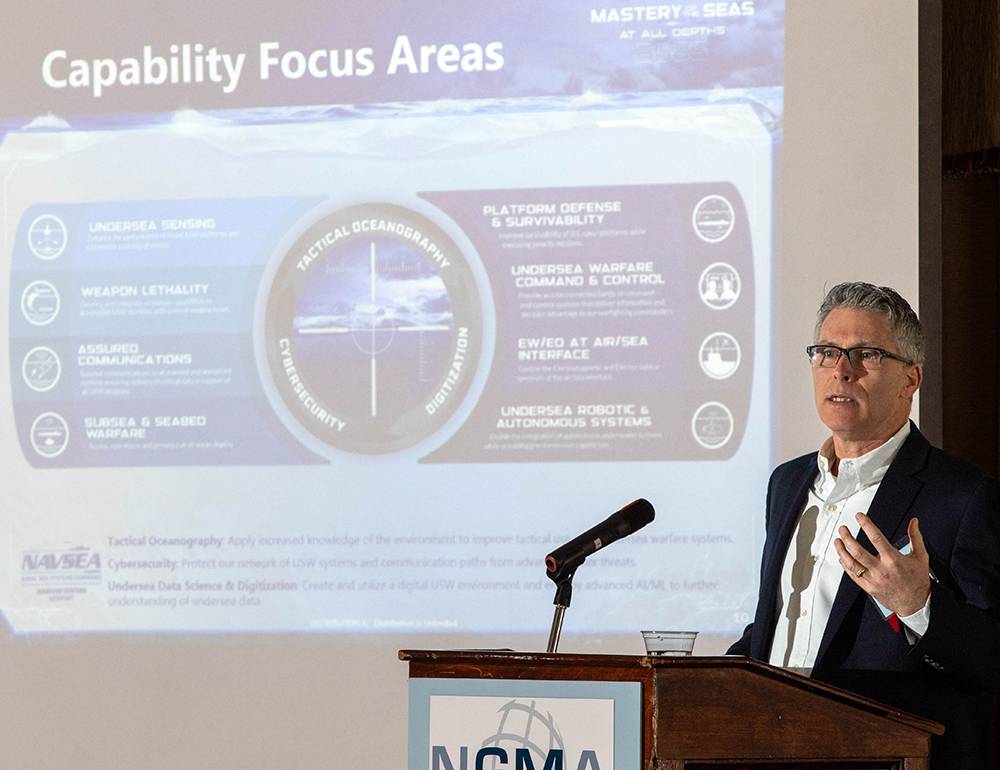
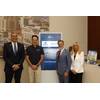
Naval Undersea Warfare Center (NUWC) Division Newport Deputy Technical Director Stephen O’Grady speaks at the Ocean State Workshop, an event hosted by NUWC Division Newport and the Rhode Island chapter of the National Contract Management Association at Naval Station Newport’s Officers’ Club on Jan. 27, 2026. The presentation focused on wartime readiness and the important relationship between industry and Division Newport. More than 250 people and 80 companies attended to hear presentations, netw
As global tensions rise and the U.S. Navy prepares for the possibility of high-end conflict, leaders at the Naval Undersea Warfare Center (NUWC) Division Newport say success will depend not only on technology, but on how well government and industry work together.
That message was front and center during the Ocean State Workshop, an event hosted by Division Newport and the Rhode Island chapter of the National Contract Management Association (NMCA). More than 250 people attended the workshop held Jan. 27 at Naval Station Newport’s Officers’ Club. The event brought together Division Newport personnel and private-sector partners from more than 80 companies to network, discuss wartime readiness and explore the relationships needed to support it.
Throughout the day, speakers stressed the traditional government-contractor dynamic must evolve into a tighter, more collaborative partnership if the Navy is to move fast enough in a future fight.
Division Newport Deputy Technical Director Stephen O’Grady said the shift is just as much cultural as it is procedural. In the past, he noted, the relationship between the commercial world and the government could be adversarial, with the government acting as an enforcer of requirements. Today, he said, Division Newport must serve as a bridge between operational needs and industrial capability.
“We’re not a production house — that’s what you do,” O’Grady said. “So, our mindset should be that we are there to be the translation between the warfighters’ needs and the production of the technology that supports them.”
That translation role becomes more urgent under wartime conditions, when timelines shrink and demand for repairs, parts and new capabilities can surge. Division Newport Commanding Officer Capt. Kevin Behm explained that handling potential wartime surges is a group effort.
Those partnerships, he explained, are the key to overcoming production and maintenance challenges that impact the fleet.
For Division Newport, where the mission includes developing and sustaining undersea warfare systems, those realities reinforce the need to align early and often with companies that design, build and maintain critical technologies.
Chad Hennings, former Division Newport commanding officer, focused his remarks on decision speed inside the system itself. Hennings, who now works on wartime readiness initiatives as the Wartime Acquisition Response Plans (WARP) lead, said moving from a command leadership position into a role with heavier bureaucracy was eye-opening.
He pointed to rapid prototyping efforts, where industry delivers quickly but government decisions lag, saying delays eat into the schedule margin companies need to solve technical problems.
Hennings urged both sides to think beyond simply accelerating existing processes and instead rethink how support is delivered, from remote technical assistance to more realistic planning for wartime supply demands.
Andrew Nagelhout, Division Newport’s deputy head of the Contracts Department, connected those operational concerns directly to acquisition strategy. In a wartime environment, he explained, contracting timelines may need to shrink dramatically.
He emphasized the need for flexible contract structures and early identification of critical supplies and services so industry can prepare for sudden demand. Even the fastest contract action, he noted, cannot overcome production realities if lead times are long.
“Time is the new currency”
Referencing the warfare center’s “Mastery of the Seas at All Depths” 10-year strategic vision, O’Grady said an operational advantage depends not only on breakthrough technical excellence, but also on breakthrough acquisition agility.
“Time is the new currency,” O’Grady said. “Our adversaries are moving technology from the lab to the hull, while we’re still caught in the second round of price negotiations. A perfect contract delivered too late is a technical failure. Our success is measured by the clock, and our job is to buy back the time our Sailors need to maintain mastery of the seas.
O’Grady described past instances where extraordinary effort produced rapid results but warned that heroics alone cannot sustain readiness. “We’re not looking for more miracles,” he said. “We’re looking for a more lethal system.”
That system, he explained, depends on industry understanding Navy priorities early, being transparent about production limits and risks, and working side by side with government teams to solve problems before they become emergencies.
The workshop’s format reinforced that collaborative approach. In addition to presentations, attendees participated in breakout sessions designed to generate practical recommendations for how Division Newport and its partners can adapt processes for a wartime environment. Organizers said the goal was not just to brief industry, but to listen.
Maria Gregory, director of Division Newport’s Office of Small Business Programs, finished the day discussing the warfare center’s small business performance, small business and WARP, the Maritime Industrial Base and emphasizing the importance of continued engagement with Division Newport.



 August 2026