Fugro Increases Contribution to UN Ocean Decade Initiative
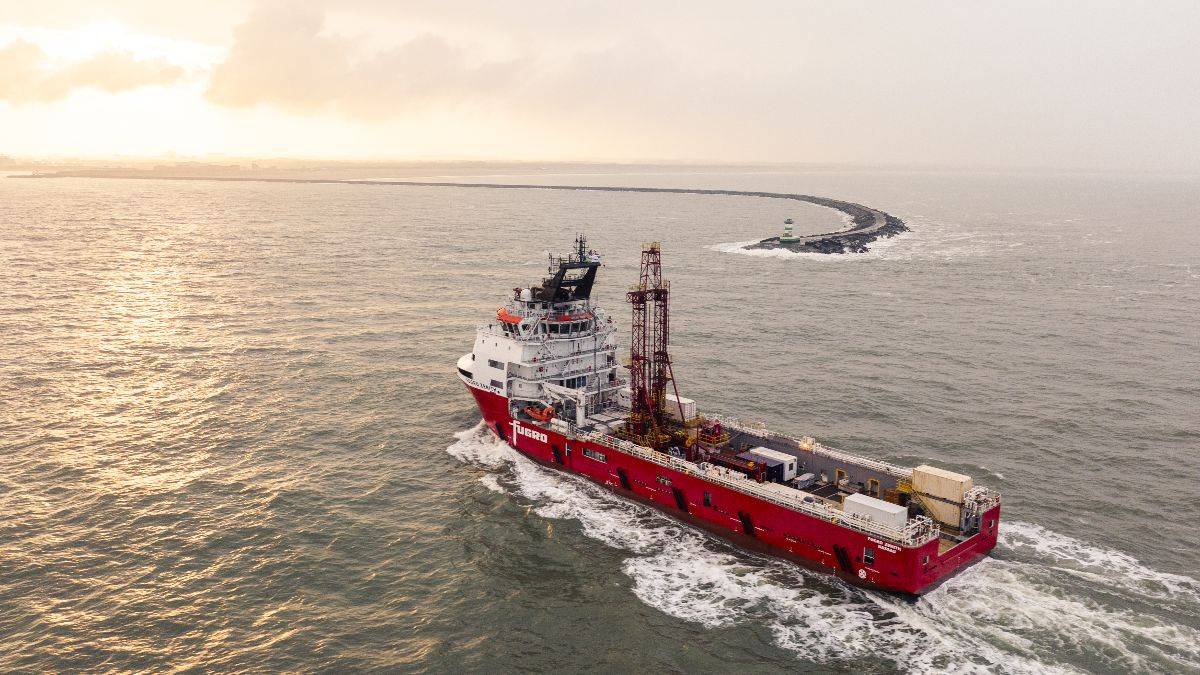
Source: Fugro
Fugro has announced further commitment to The Nippon Foundation-GEBCO Seabed 2030 project, a flagship program of the United Nations Ocean Decade.
As the Ocean Decade reaches its halfway point, Fugro is expanding the group of vessels actively contributing to the Seabed 2030 project. Fugro’s largest vessels, working on geotechnical surveys, are now also contributing to the collection of ocean-floor data alongside the original and ongoing geophysical fleet.
The UN Ocean Decade aims to generate “the science we need for the ocean we want.” Achieving this vision depends heavily on data, especially seafloor data. This is foundational for understanding ocean health, facilitating safe navigation, supporting the development of a sustainable ocean economy, modelling climate change, and protecting marine ecosystems. Despite oceans covering more than 70% of the planet, only 27.3% of the seafloor has been mapped to modern standards in the 2025 GEBCO grid, underscoring the urgency of global collaboration.
Under the new commitment, Fugro has begun collecting Single Beam Echo Sounder (SBES) bathymetry data from its geotechnical fleet during vessel transits. This higher number of vessels broadens the scope and cadence of ocean-floor data collected and contributed to Seabed 2030. The expansion complements Fugro’s existing in-transit multibeam echosounder (MBES) program on the geophysical fleet, marking a significant step forward in the race to produce a definitive, publicly available map of the entire ocean by 2030.
Seabed 2030 Director Jamie McMichael-Phillips said: “Industry collaboration is essential to achieving Seabed 2030’s mission of delivering a complete map of the world’s ocean floor, and Fugro has been a longstanding and valued partner in this global effort. The expansion of bathymetric data collection across its fleet is welcome news and demonstrates how operational vessels can contribute valuable data during transits. Contributions like these play a vital role in accelerating seabed mapping.”
Key highlights
New datastream: SBES in‑transit bathymetry now captured by geotechnical vessels, including Fugro Zephyr, Fugro Quest, Fugro Voyager, Fugro Revelation, Fugro Zenith, and Fugro Synergy.
Momentum since launch: Since November 2025, these vessels have acquired well over 3,000 line kilometers of SBES in‑transit data.
Proven at scale: Fugro-acquired MBES seafloor mapping data for Seabed 2030 spans over 3,000,000 km² —approaching the size of India.
Dual-technology approach: Integration of MBES and SBES data across an expanding fleet increases coverage and fills priority gaps efficiently.
Remote-by-design: Enabled by Fugro’s Geo-data Factory for secure, automated data transfer and supported by Remote Operations Centres (including Aberdeen), which reduce operational impact and cost by removing the need for dedicated survey crews.



 August 2026