

Rising expectations: A deep dive on underwater vehicles
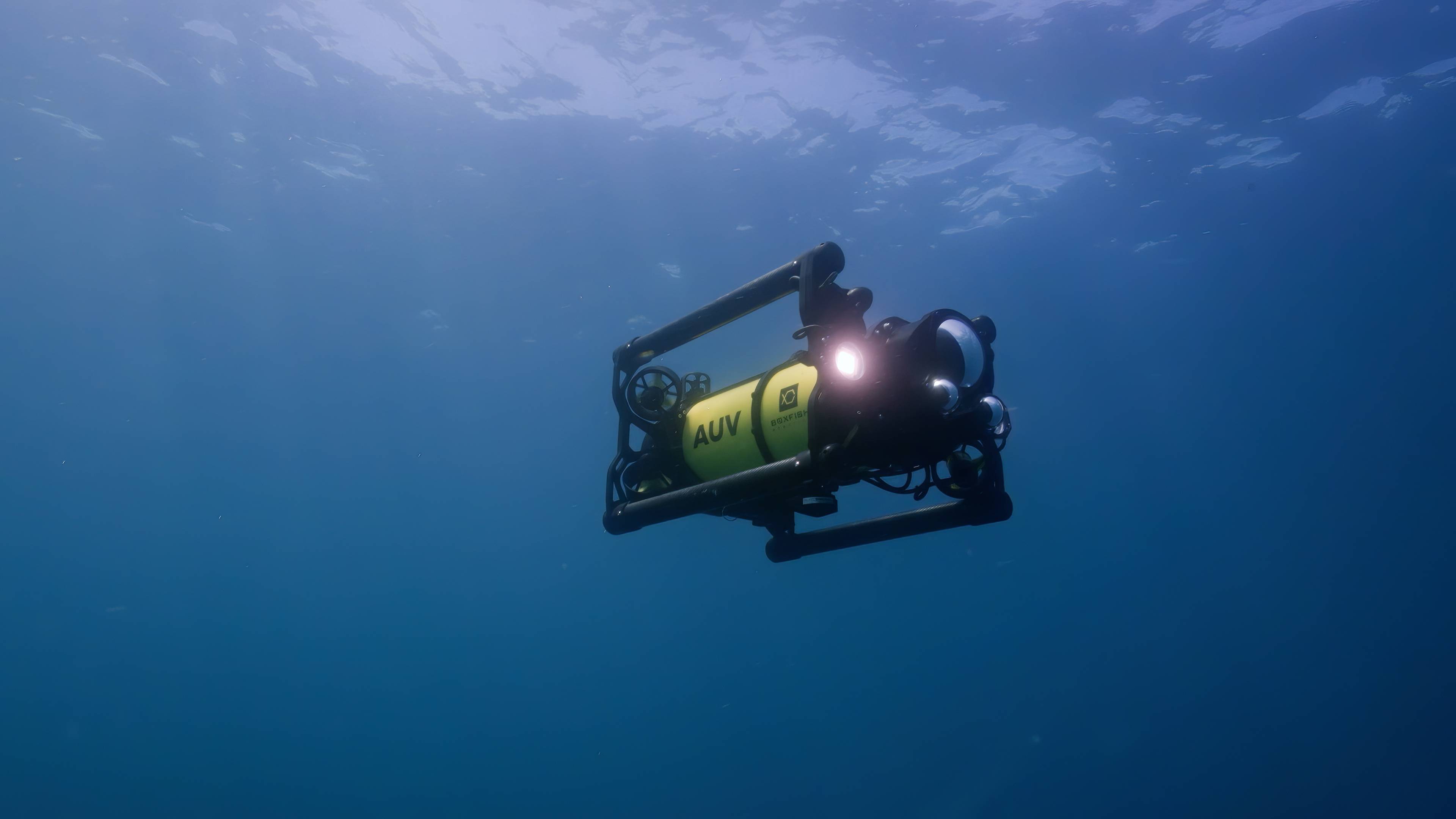
Boxfish AUV. Credit: Boxfish Robotics
Underwater vehicles have solidified their position, with autonomous and remotely operated platforms becoming core operational tools across offshore, defense, inspection and maintenance, exploration and marine science applications. As the subsea industry rapidly evolves to keep pace with global trends, several defining themes emerge amongst leading vehicle companies—multi-use, usability, visibility, endurance and, unsurprisingly, autonomy.
Multi-Use
As underwater vehicles assume more responsibility, there is a noticeable shift away from standalone, single-domain vehicles in favor of fleets of autonomous platforms, deployable on the surface, in the air and under the waves.
“The most common theme we see is the ability to operate in multi-vehicle autonomous teams with other platforms,” said Terry Sloane, founder, owner and managing director of Planet Ocean and ecoSUB Robotics, an operating division of Plant Ocean. ecoSUB demonstrated a multi-use fleet in their 2021-2023 SoAR (Squads of Adaptive Robots) project, which coordinated a large-scale survey and exploration mission designed, monitored and adapted in real-time by an intelligent “Autonomy Engine.” The SoAR fleet consisted of ecoSUB's Autonomous Underwater Vehicles (AUVs), the National Oceanography Centre's Auto-Hover 1 hover-capable platform, and Sonardyne’s REAV-60 Unmanned Surface Vehicle (USV) “Decibel.”
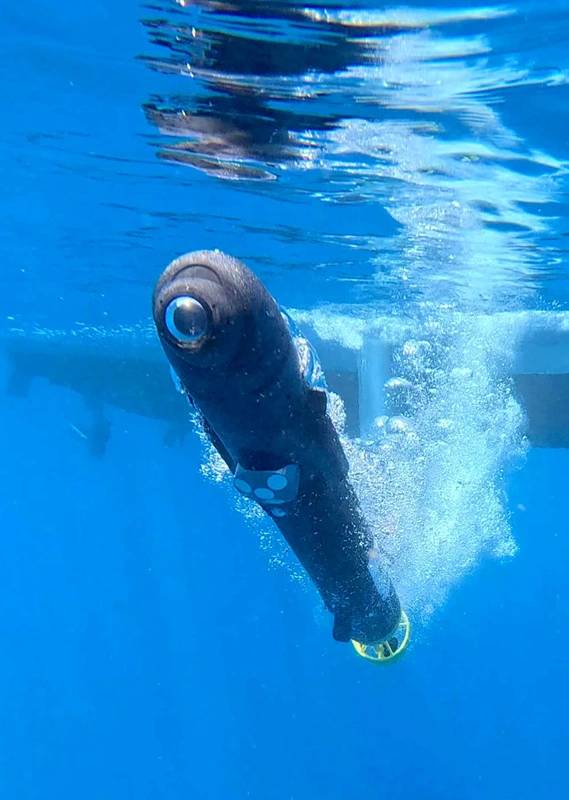 ecoSUB AUV. Cedit: ecoSUB
Duane Fotheringham, president of the Unmanned Systems group in HII's Mission Technologies division noted that the scale of underwater vehicles is growing. “Customers are moving away from buying one or two vehicles for experimentation and toward fleet-level quantities. That shift signals that unmanned undersea systems are transitioning from trials into sustained, operational use with real training, logistics and lifecycle expectations.”
Usability
User experience holds enormous weight for customers shopping for underwater vehicles. Systems need to be efficient, customizable and ultimately useful for the desired work.
“Customers want systems that can handle uncertainty, operate with limited communications, and integrate smoothly into broader maritime forces that include crewed ships, aircraft and other unmanned platforms,” said Fotheringham. “They're also looking for reduced operator burden.”
“We’re also seeing strong demand for smaller, more portable platforms that don’t require large vessels or complex logistics to deploy,” said Vera Bronza, director of sales and marketing at Boxfish Robotics. Precise data synchronization is also very important, she added, as the company’s AUVs can synchronize data from all sensors, navigation and imaging.
“Beyond that, customers care a lot about efficiency and usability: how quickly the system can be set up, how many people are needed to operate it, and how much useful data can be collected in a single deployment. Flexibility is also important, so systems can evolve as project requirements change.”
Flexibility is a well-recognized element for VideoRay, which prioritizes modular vehicles. “Customers want everything. They want vehicles to be tiny and portable, but also super powerful and take giant payloads. That's where modular technology is awesome, because we can accommodate that to a larger degree,” said Marcus Kolb, chief technology officer at VideoRay, an AV Company. Their newest vessel, Mission Specialist Wraith, builds upon its predecessor, Mission Specialist Ally, promising improved agility and increased thrusters.
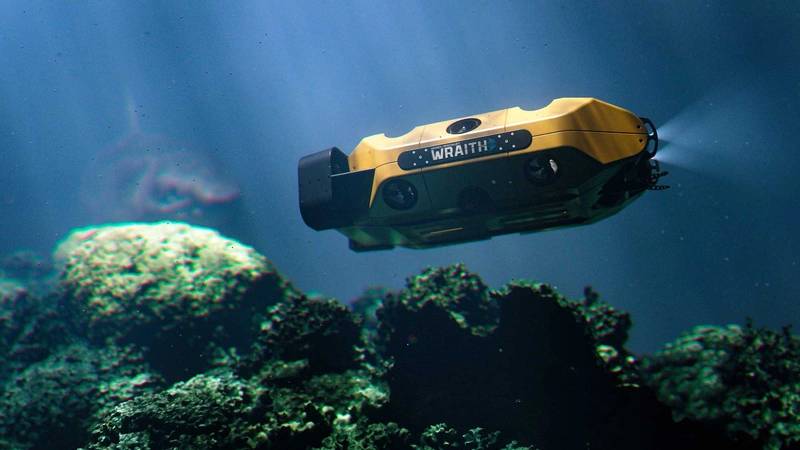 Mission Specialist Wraith. Credit: AeroVironment Inc/VideoRay
Visibility
While underwater vehicles need to be efficient and operator-friendly, they also must be effective at what they do best—seeing what humans cannot. High-quality imaging is always near the top of a customer's list, Bronza stressed. “Reliable navigation and positioning are also critical, especially for surveys that need to be repeated over time.”
Higher-quality imaging also indicates a shift towards increased tools and sensors for visibility and data visualization. “We're also seeing an interest in photogrammetry, where customers want to generate high-resolution 3D point clouds and/or ‘digital twins’ of underwater infrastructure for long-term monitoring,” said Joseph Segato, account executive at Deep Trekker. “Finally, in low-visibility environments, a multibeam sonar has become a non-negotiable requirement due to visibility constraints.”
Endurance
The performance and functionality of an underwater vehicle is only as impactful as its endurance, with customers across the board seeking longer deployments. While this isn't exclusively based on battery capacity—energy management and mission configuration are also factors—subsea batteries constitute their own rapidly involving industry, balancing energy density, safety, modularity and regulatory compliance.
Many subsea batteries are lithium-ion (Li-ION), which offer an ideal balance between energy density, weight, volume and lifecycle performance, explained Sören Johannsen, chief operating officer and head of marketing at SubCtech. “For underwater vehicles, high energy density directly translates into longer mission endurance or increased payload capacity. Li-ION batteries also provide high efficiency, stable discharge characteristics and good scalability across different system sizes.” Deep Trekker's REVOLUTION Remotely Operated Vehicle (ROV) and Boxfish's AUVs and ROVs are all powered by Li-ION.
SubCtech's own SmartPowerBlocks are also Li-ION, combining a modular mechanical design with integrated battery management, monitoring and safety functions for subsea applications. “Their modularity allows customers to scale capacity and voltage without redesigning the entire power system,” Johannsen said. SmartPowerBlocks are also customizable, adapting battery geometry, capacity, voltage levels and interfaces to match specific vehicle constraints and mission requirements. “This can include form-factor optimization for tight hull spaces, redundancy concepts for safety-critical applications, tailored discharge profiles or integration with vehicle-specific communication and monitoring systems. We also adapt solutions for different regulatory environments, whether for defense platforms, scientific vehicles, or oil and gas all-electric systems, while maintaining a common, qualified technology base.”
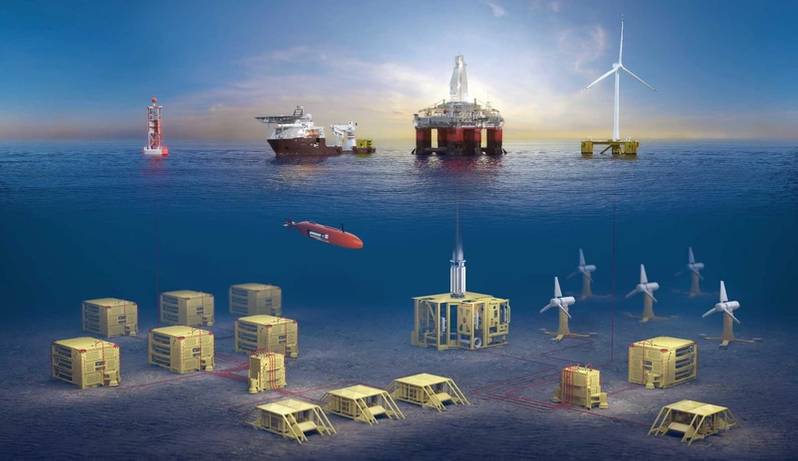 Battery skid deployment for oil & gas customer. Credit: SubCtech
 Deep Trekker’s REVOLUTION ROV. Credit: Deep Trekker
Kraken Robotics’ SeaPower battery platform is also built on Li-ION technology, embedding pouch cells and electronics in a silicone polymer matrix and operating up to 6,000 meters. It boasts a pressure-tolerant, potted architecture that removes the need for rigid pressure housings or oil compensation and is built on a modular design, allowing for voltage, size and energy to be adapted to project needs. “We're seeing a strong increase in demand for SeaPower batteries, particularly for defense applications and extra-large unmanned underwater vehicles (XLUUVs), where endurance, reliability, and safety are mission-critical,” said Patrick Paranhos, Vice President, Battery Systems. “This growth reflects a broader shift toward longer-range, higher-power subsea platforms operating in increasingly complex environments.”
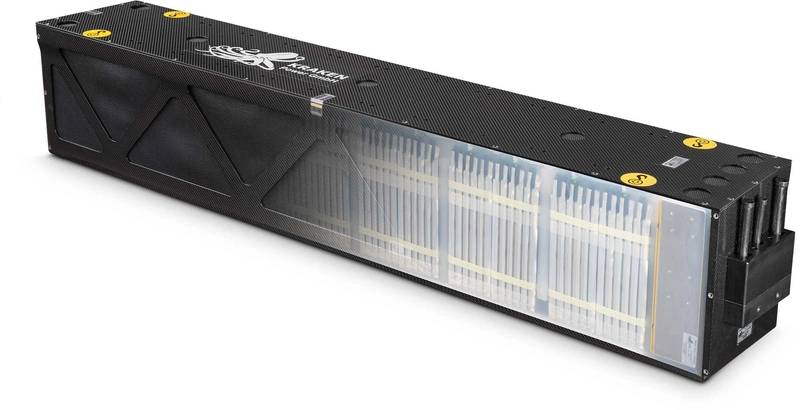 Kraken Robotics’ SeaPower battery. Credit: Kraken Robotics.
 REMUS UUV. Credit: HIIAt HII, the REMUS Unmanned Underwater Vehicle (UUV) also offers a modular energy architecture, allowing the vehicle to carry one, two or three battery packs and for endurance to be scaled depending on speed, payload and operating profile. While Li-ION batteries are the most common, alkaline batteries are also an option for certain specialized missions. ecoSUB's AUVs are also standard fit with rechargeable Li-ION batters, but alkaline cells can still be accommodated.
VideoRay took battery needs into their own hands. “We were going back and forth between nickel-metal hydride because they're easy to ship, and Li-ION, which are a real pain to ship. We co-developed our own simply because we couldn't find anybody else that made one,” said Kolb. “Our batteries, like all of our modules, have a brain on board. They have a node that can talk to request information. But more than that, they actually output regulated power at 48-volt nominal, and then it goes down to the cutoff voltage on lithium.”
Autonomy
Autonomy is a growing request, if not requirement, in the subsea industry and beyond to enable work to be completed faster and over a longer period than when operated by a human. Simply put, more data points can be collected, processed and visualized. In offshore, exploration and defense applications, autonomous systems remove a level of risk by reducing dangerous or extreme situations. What's crucial, Fotheringham emphasized, is that underwater vehicles are capable of autonomy beyond sea trials. “Autonomy is expected to function in real-world conditions, not just controlled scenarios.”
Underwater vehicles are evolving from specialist tools into routine, networked assets, guided by project needs and customer demands. While multi-use, usability, visibility, endurance and autonomy stand out as common trends for next-generation vehicles, they also serve as indicators for the seemingly boundless possibilities still to come.





 August 2026