Deep Ocean Landers Help Scientists Explore Dark Oxygen Mystery
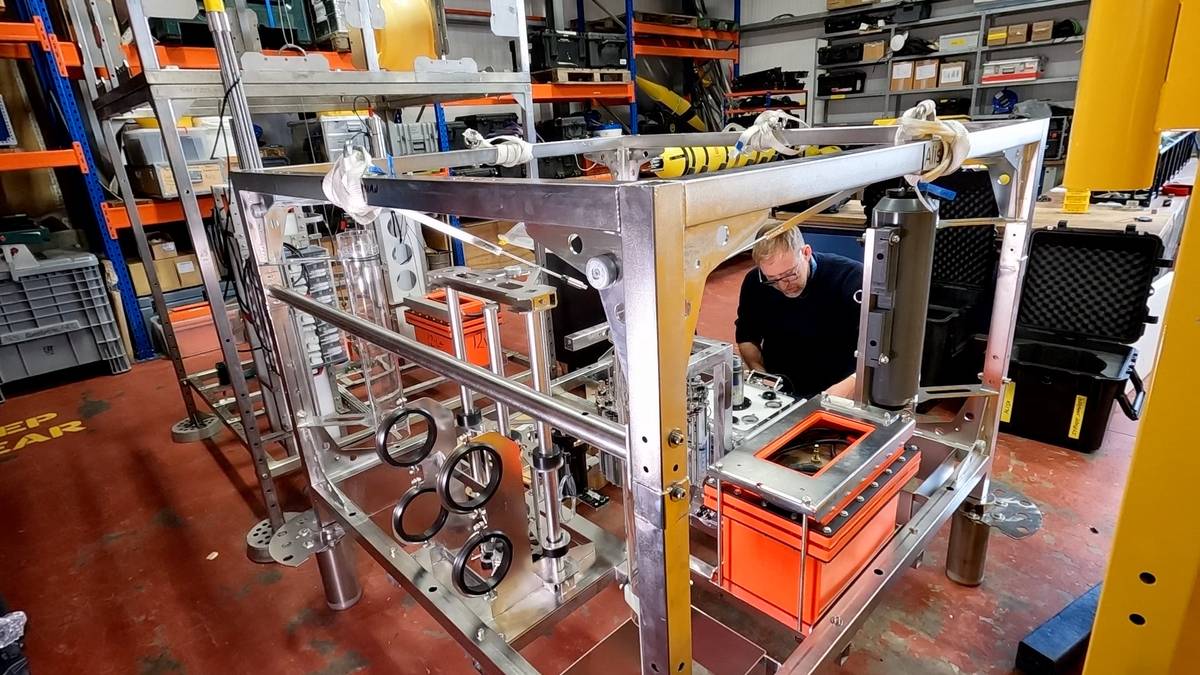
Credit: Weber Shandwick/Nippon Foundation
Two world-first landers that can withstand 1,200 times the pressure on earth’s surface will help answer one of the ocean’s deepest mysteries – where does Dark Oxygen come from?
Professor Andrew Sweetman of the Scottish Association for Marine Science (SAMS) made waves in 2024 when his team discovered metallic nodules in the deep sea appeared to be producing oxygen. These nodules, which contain highly sought-after metals, could clarify how animal life is distributed thousands of meters beneath the waves, where sunlight cannot penetrate, calling into question the prevailing scientific understanding that oxygen production is linked to sunlight, through processes such as photosynthesis.
But exactly how this oxygen is produced in the darkness of the deep ocean is still unclear. The Nippon Foundation has funded a three-year research project that convenes Professor Sweetman alongside geobiologist and Mars Rover veteran Professor Jeffrey Marlow from Boston University, and renowned chemist Professor Franz M Geiger, of Northwestern University, to answer this question.
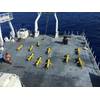
To find the answer the team of leading experts, known as The Nippon Foundation - Dark Oxygen Research Initiative (DORI), has designed two highly specialised landers that resemble equipment more often associated with space exploration. Named Alisa and Kaia after Professor Sweetman’s daughters, they will determine if the nodules spontaneously interact with salt water to create electricity, whether there’s a biochemical process at work, or another, as yet unknown factor is at play.
The Nippon Foundation’s funding includes construction of the world-first landers. The landers will be submerged in the Clarion Clipperton Zone (CCZ) in the central Pacific Ocean in the spring, with initial results expected later this year. IOC UNESCO has endorsed the project as a UN Ocean Decade activity.
The research team will submerge the landers, along with a device known as an Aquatic Eddy Covariance (AEC) lander, which will measure the ‘flux’ of oxygen in the area to determine any patterns in oxygen production, and whether or not other environmental factors could be at play. Alisa and Kaia will collect water samples, take precise measurements from the nodules, introduce chemical tracers, and discover whether protons linked to water oxidisation are present, a key differentiator between electrolysis and other potential oxygen-generating mechanisms.
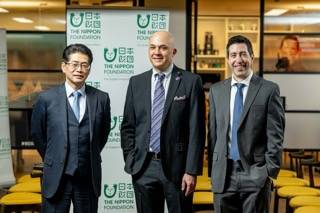 (L-R) Mitsuyuki Unno of The Nippon Foundation, Prof Franz M Geiger of Northwestern University, Prof Jeffrey Marlow of Boston University. Credit: Weber Shandwick/Nippon Foundation



 August 2026