MIT Researchers Reveal "Ammonia-Aluminum" Fuel for Prolonged Ocean Exploration
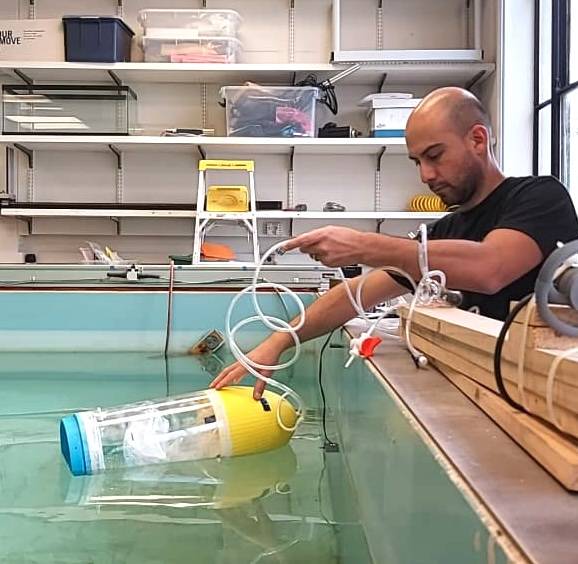
Photo courtesy of Francisco Jeldres / Massachusetts Institute of Technology
A new study from the Massachusetts Institute of Technology (MIT) has introduced a transformative chemical fuel system that could redefine buoyancy control for long-range autonomous underwater vehicles (AUVs).
Published in Cell Reports Physical Science, the research demonstrates that reacting activated aluminum with aqueous ammonia significantly enhances gas generation and energy density compared to traditional aluminum-water chemistry.
This breakthrough provides a viable path for extending mission duration and reducing costs for underwater platforms that currently rely on lower-energy-density lithium-ion batteries.
Current buoyancy engines typically rely on either power-hungry mechanical pumps or heavy, low-efficiency compressed gas cylinders. This new technology, developed by Francisco Jeldres and Douglas P. Hart, shifts the paradigm toward in-situ, on-demand chemical gas generation. By utilizing a 30% ammonia solution as a solvent, the reaction generates hydrogen gas, ammonia vapor, and thermal energy-delivering significantly more potential energy per unit volume of fuel and solvent than existing methods.
"The core advantage is the departure from passive, high-pressure storage in favor of active, in-situ generation within a flooded section of the vehicle", said lead researcher Francisco Jeldres. "This significantly reduces the vehicle's structural weight by replacing heavy pressure vessels with a compact, simple reaction assembly that operates effectively at ambient hydrostatic pressure."
Key Technical Breakthroughs:
- Enhanced Yield at Depth: Experimental results demonstrated reliable gas generation under hydrostatic pressures up to 55 bar (550m depth), with ammonia contributing at least 20% (worst case) of the total gas volume even at high pressures.
- Maximized Buoyancy Retention: Beyond the use of salt additives (NaCi) to "lock" gas in its buoyant state, the study provides an intermolecular interaction analysis showing that transport phenomena within the reaction zone help prevent gaseous ammonia from re-dissolving into the available water. This ensures the system maintains high lift efficiency at depth.
- Extended Endurance and Cost Reduction: While lithium-ion batteries are limited by energy density, aluminum offers a volumetric density up to 40 times higher. This significantly extends the mission endurance of ocean monitoring and surveillance, dramatically reducing the frequency of deployments and the reliance on expensive surface support vessels, which are a primary driver of subsea operational costs.
Beyond the current findings, the researchers have identified several additional aqueous solutions that, when coupled with ammonia, show potential for even greater gas generation and more precise control of the aluminum chemical reaction. This discovery establishes a clear technological roadmap for the next generation of high-performance underwater buoyancy engines, offering a flexible platform that can be tuned for diverse mission requirements
This research was supported by the MIT Portugal Program and has resulted in a filed patent for the use of aluminum fuel in ocean applications.
The full paper can be read here.



 August 2026