Schmidt Sciences Awards Over $3m to Study AI’s Impact on Jobs
© Schmidt Sciences
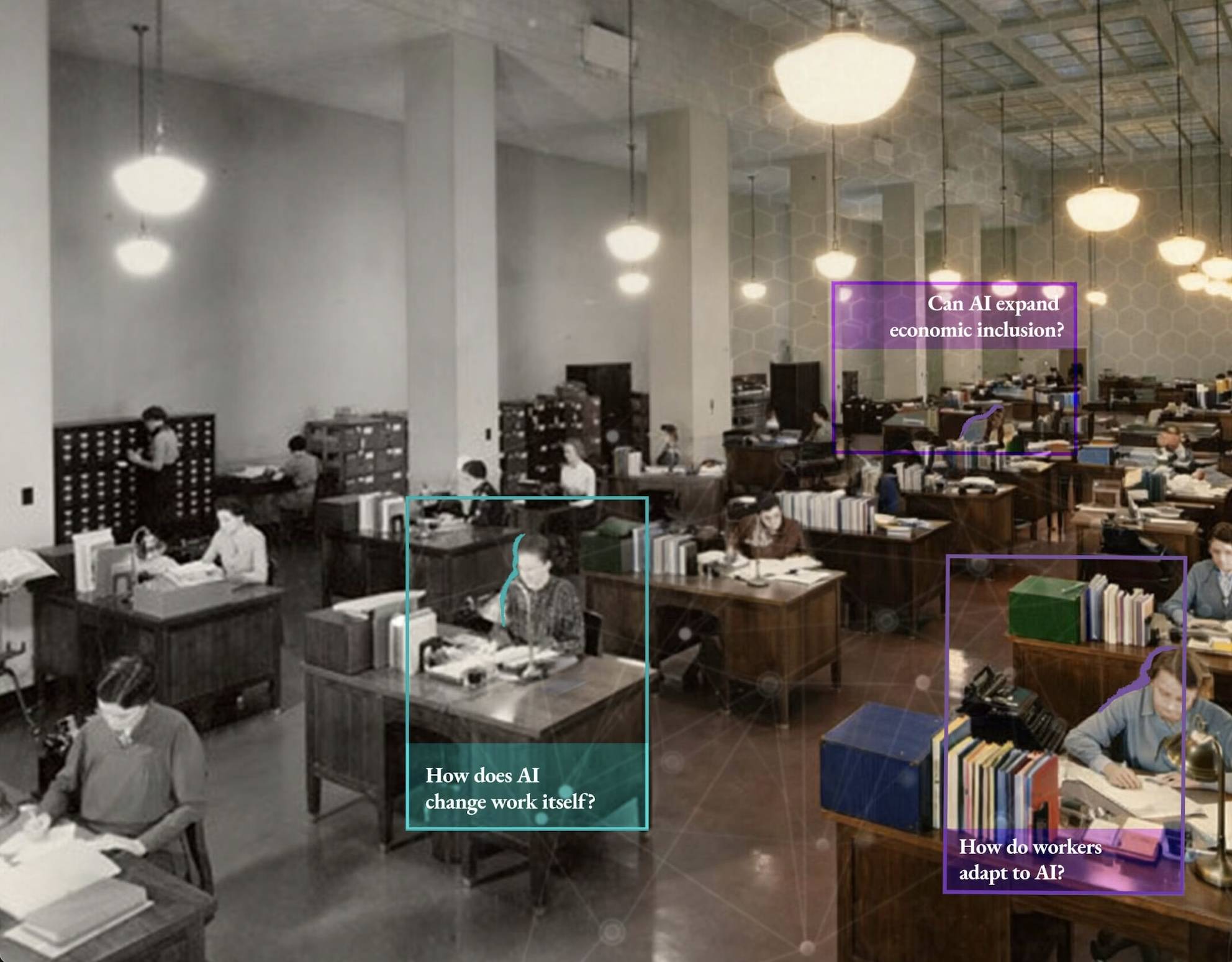
As part of its AI at Work program, Schmidt Sciences has awarded over $3 million to 19 real-world studies conducted by international labor economists about how AI is transforming jobs around the world, the organization announced today.
The awardees will each receive up to $200,000 to study how emerging AI technology is affecting worker productivity, wages, employment and careers, with the goal of uncovering where AI can provide the greatest value to labor markets and the global economy, and where AI’s impact will be felt most acutely.
Schmidt Sciences is supporting both work underway and commissioning new studies. Over the next two years, awardees will conduct randomized controlled trials and similar field studies in job sites ranging from banks to factories to laboratories to the gig economy.
The 19 researchers leading these efforts, selected from more than 300 applicants, represent a variety of career levels, from PhD candidates to professors, and hail from 16 institutions in eight countries. Their projects reflect this global scope, exploring how AI affects loan officers at East African banks, employees at Southeast Asian small businesses, workers in the Chilean government, job seekers in Sierra Leone and American drivers competing with autonomous taxis.
AI at Work partnered with five leading economists to source, review, and select awardees. The review panel included MIT’s David Autor and Nobel Laureates in Economics Daron Acemogluand Simon Johnson, University of Pennsylvania’s Ioana Marinescu, University of Chicago’s John List, the Abdul Latif Jameel Poverty Action Lab at MIT (JPAL), and research institution UNU-WIDER.
In addition to funding, Schmidt Sciences is providing awardees with connections to its grantee network, feedback on their projects and access to computing support.
These projects will also inform ongoing work between The Rockefeller Foundation, Schmidt Sciences and other foundations on scenarios for AI’s impact on the labor markets. Last October,The Rockefeller Foundation collaborated with Schmidt Sciences to gather economists, AI companies and civic leaders at the Bellagio Center in Italy to develop scenarios that will inform actions that governments and companies can take to maximize the opportunities for AI to benefit the common good.
The winning projects are led by:
- Youn Baek, postdoctoral associate, NYU Stern School of Business
- Johanna Barop, doctoral candidate, Oxford University
- Daniel Björkegren, assistant professor, Columbia University School of International and Public Affairs
- Silvia Castro, postdoctoral researcher, INSEAD and Ludwig Maximilian University of Munich
- Richard Freund, Senior Research Associate, MIDE Development and Non-Resident Researcher, UN University World Institute for Development Economics Research
- Paul Gertler, Li Ka Shing Professor of Economics, UC Berkeley Haas School of Business
- Luca Henkel, assistant professor, Erasmus University Rotterdam
- Mitchell Hoffman, Richard F. Aster Jr. Professor of Economics, UC Santa Barbara
- Ben Hyman, economist and senior researcher, California Policy Lab, UCLA
- Brian Jabarian, Howard & Nancy Marks Fellow (postdoctoral), University of Chicago Booth School of Business
- Hyunjin Kim, assistant professor, INSEAD
- Tim Köhler, research fellow, University of Cape Town and research associate, Stellenbosch University
- Johanna Barop, doctoral candidate, Oxford UniversityJoseph Levine, doctoral candidate, Oxford University
- Benjamin Manning, doctoral candidate, MIT Sloan School of Management
- Kristina McElheran, associate professor, University of Toronto
- Jiarui (Jerry) Qian, doctoral candidate, University of Virginia
- Simon Quach, assistant professor, University of Southern California
- Jorge Tamayo, assistant professor, Harvard Business School
- Nety Wu, doctoral candidate, INSEAD
The AI at Work program plans to issue additional calls for proposals in 2026. Learn more about the program here.







 August 2026