Marine Technology News Search
Search term • "advanced navigation"
Create an email alert for "advanced navigation"

Deep Dive Talks with Schmidt Ocean Institute's Lead Tech John Fulmer
Join us for a discussion with the Schmidt Ocean Institute's Lead Technician John Fulmer onboard the R/V Falkor (too). Learn about life on the ship for John as he navigates onboard operations on a research vessel with some of the most advanced technology in the world! --
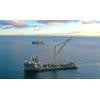
Boskalis Wraps Up Moray West Offshore Wind Farm Ops
Dutch marine services firm Boskalis has completed its activities in support of the development of Ocean Winds’ 882 MW Moray West offshore wind farm in Scotland.As part of its multidisciplinary role in the project, Boskalis deployed six vessels to carry out large number of activities off the east coast of Scotland in the Moray Firth.First, Boskalis’ wholly-owned subsidiary Gardline carried out extensive geotechnical and geophysical survey works prior to the installation work.Then…
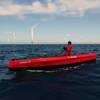
Subsea Europe Services Enters USV Market with C-RECON 13-ES
Subsea Europe Services (SES) GmbH, a provider of marine technology solutions for the offshore energy and ocean science sectors, has entered the Uncrewed Surface Vessel (USV) market with its first in-house developed platform, the C-RECON 13-ES.Set to enter service in early 2026, the 4-meter, all-electric vessel is designed to simplify USV operations by combining performance, versatility, and zero-emission sustainability.

NOAA Announces 2025 Ocean Exploration Funding Opportunity
NOAA Ocean Exploration has announced its Ocean Exploration Fiscal Year 2025 Funding Opportunity and is soliciting proposals focused on either one of the following two themes:OCEAN EXPLORATION: Ocean Exploration proposals should support exploration of unknown or poorly known ocean areas, processes, or resources in waters deeper than 200 meters or in tropical mesophotic environments. Projects can entail conducting ocean exploration (e.g.…
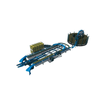
Huisman and ESD Forge Offshore Cable-Lay Solutions Alliance
Dutch firm Huisman, which makes heavy construction equipment for the global offshore energy industry, has signed a partnership agreement with ESD to expand its cable-lay product portfolio and increase its position in the offshore wind market. The agreement will see the combination of ESD’s expertise in designing smart cable-lay solutions with Huisman’s in-house engineering, production, and service…
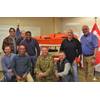
USACE Survey & Mapping Employees Awarded for USV Innovation
U.S. Army Corps of Engineers’ employees in the New York District’s Survey and Mapping Branch, Operations Division, have been recognized with the 2023 Innovation of the Year Award from Army Corps Headquarters in Washington, D.C., a national honor recognizing outstanding accomplishments in engineering forwarding the mission and serving the Nation.A team of 36 employees planned, designed and built SURVEYOR AMY…
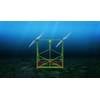
Inyanga Launches Fundraising Campaign to Advance Tidal Energy Tech
Inyanga Marine Energy Group has launched a crowdfunding round to advance the development of its HydroWing tidal energy technology and projects.The crowdfudnign campaign has been opened in partnership with Crowdcube.HydroWing aims to unlock the full potential of tidal energy with its patented ‘all in one’ solution.In September 2024, HydroWing was awarded the largest tidal energy project in the UK in…

Singapore Trials IHO S-100 Aboard Italian Navy Training Ship
The International Hydrographic Organization - Singapore Innovation and Technology Laboratory (IHO-Singapore Lab) is conducting trials of next generation IHO S-100 standards and dual format Electronic Navigational Charts (ENCs) on a prototype S-100 ECDIS [2] aboard the Italian Navy's training ship, Amerigo Vespucci.This is known as the “dual fuel” mode within the international hydrographic community…
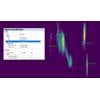
Echoview 15 for Hydroacoustic Data Analysis
Echoview Software launched Echoview 15, an update of its flagship data processing software designed for water column research.Echoview is designed to convert raw measurements from a wide range of echosounders and sonars into meaningful metrics. “This release provides users with powerful new tools which continue to advance the study and understanding of underwater ecosystems,” said Brett Merritt, CEO…

DoD Looks for Advance Underwater Communication Solutions
The US Department of Defense (DoD) has announced funding opportunities as part of the AUKUS Maritime Innovation Challenge 2025 for commercial technologies to solve undersea and information warfare issues.As the second collaboration launched between the U.S.'s Defense Innovation Unit, Australia's Advanced Strategic Capabilities Accelerator, and the UK's Defence and Security Accelerator, the Challenge…
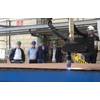
Gondan Cuts First Steel for New USV for Major Industry Alliance
Spain-based Gondan Shipbuilders has started the construction of an advanced remotely operated unmanned surface vehicle (USV) for a company made up of DeepOcean, Solstad and Østensjø Rederi alliance called USV A/S.The project focuses on improving subsea operations, targeting a reduction of CO2 emissions by more than 90% compared to conventional methods.The new USV will be used for underwater maintenance and inspection missions.Designed by Salt Ship Design…
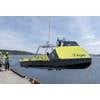
Argeo Picks Henriksen's LARS for Argus USV
Argeo has become the first commercial customer for the new Henriksen SOLUS launch and recovery system (LARS) for unmanned surface vehicles (USV). Argeo employs a range of unmanned and autonomous vehicles for providing its advanced offshore survey and inspection services. The new SOLUS system now makes it possible for an uncrewed USV to be recovered by the mothership even in unfavorable sea conditions.The…

Advancing Hydrography in the Great Lakes
In this live webinar, you’ll discover how our latest hydrographic survey innovations, developed and refined across multiple years of Great Lakes operations, can support your infrastructure, energy, and environmental initiatives.Hydrospatial experts from NV5, NOAA, and Exail will be presenting.We’ll highlight:- Survey efficiencies that cut timelines without compromising quality- Integration of hydrographic…
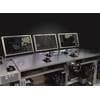
Anschütz Rolls Out Navigation and Command System for Autonomous Navy Ops
German navigation specialist Anschütz has developed a navigation and command system for autonomous and unmanned maritime operations. The approval-ready system has undergone extensive testing in autonomous operation and is currently being prepared for use in prototypes, according to the company.The autonomous navigation and command system from Anschütz provides navies with a sustainable capability and safety enhancement for unmanned systems.

MoU Signed for Pan-Arctic Cable System
Cinia Oy, NORDUnet A/S, Tusass A/S, the Dutch Subsea Cable Coalition, GlobalConnect AB, and Tampnet A/S have signed a European Memorandum of Understanding (MoU), recognizing the strategic value of a Pan-Arctic Cable System (PACS) and the contribution such a cable system will make to the global digital connectivity infrastructure.The MoU affirms the partners’ vested interests in establishing and executing…
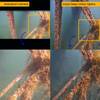
Voyis Launches Deep Vision Optics for Underwater Imaging
Voyis, a leader in underwater optical sensor technology, announced the launch of the Deep Vision Optics, an optical system designed to enhance image clarity and sharpness in subsea environments. This solution is being released for the Voyis’ Discovery Vision Systems and the Observer Imaging Systems.Underwater cameras face a significant challenge in maintaining focus across their entire field of view and working range due to the water medium.
Kongsberg Discovery Receives U.S. DoD Certification for MBR Communication System
Kongsberg Discovery announced that its Mobile Broadband Radio (MBR) MK3 series has received DD1494 certification from the United States Department of Defense (DoD), authorizing the systems for use across U.S. military operations.The DD1494 approval confirms that the MBR MK3 series, operating in the frequency range between 4.400-5.000 GHz (Nato Band IV), meets the DoD’s requirements for spectrum-dependent equipment.
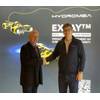
Hydromea Expands US Presence with New Local Partner
Swiss underwater robotics and communication company Hydromea has appointed Houston-based Crestone as its official EXRAY partner in the United States market.This strategic partnership aims to expand Hydromea's presence in North America and bring its innovative underwater inspection technology to a broader customer base.EXRAY is Hydromea's compact underwater inspection remotely operated vehicle (ROV) equipped with proprietary LUMA wireless communication technology…
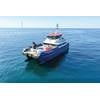
Robosys Automation Secures Offshore Wind Vessel Retrofit Contract
Robosys Automation, a leader in maritime autonomy, vessel control systems, and smart shipping solutions, has announced that it has secured a new contract to retrofit a 26-meter Damen 2610 Fast Crew Supplier (FCS) Twin Axe High Speed Support Vessel (HSSV), with its flagship VOYAGER AI advanced maritime autonomy software.The vessel, built in 2015 to Lloyd’s Register classification standards, is powered by twin Caterpillar C32 engines with direct drives and is equipped with an Alphatron autopilot…
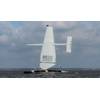
Saildrone Launches First Next-gen Surveyor USV
The first of Saildrone's new generation of Surveyor-class unmanned surface vehicles (USVs) has been launched by builder Austal USA in Mobile, Ala.Purpose-built for autonomous deep-water ocean mapping missions and maritime defense and security missions, the new USVs are being tested under contract to the U.S. Navy.At 20 meters long (65 feet) and 15 tons, the Surveyor is the world’s largest unmanned, autonomous vehicle class in operation.

 February 2026