
CSignum Launches Through-Ice Wireless Monitoring System
Source: CSignum
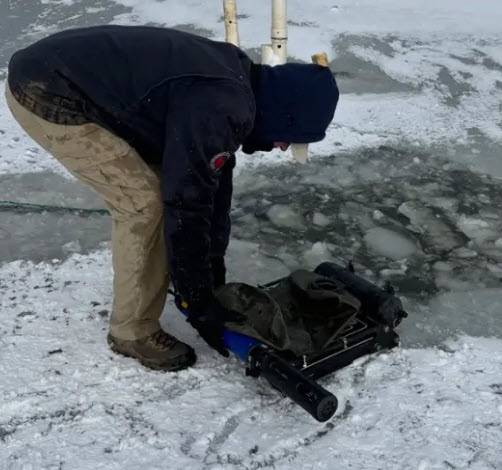
CSignum has launched its through-ice wireless monitoring technology with the patented EM-2Q electromagnetic field signalling (EMFS) system.
Critical monitoring is often suspended for several months annually, leaving a blind spot during a period of significant biological and chemical change in lakes, reservoirs, and inland water bodies, as ice formation typically forces monitoring equipment to be removed or disabled for several months each year.
Surface cables are prone to damage and failure as ice forms and shifts, creating safety risks, equipment loss, and significant gaps in environmental data.
CSignum’s EM-2Q system addresses this long-standing challenge by enabling wireless data transmission through water, ice, and surface barriers, eliminating the need for exposed cables that are vulnerable to winter conditions.
The ability to maintain monitoring under ice is critical for understanding water system health across seasonal cycles. Under-ice conditions drive key processes that influence water quality through spring and summer, yet these processes are poorly characterized due to winter data gaps.
Oxygen depletion beneath ice cover can significantly impact fish populations and overall ecosystem health but often goes undetected until adverse effects appear. Phosphorus release from sediments occurs more frequently under ice, contributing to nutrient loading and increasing the risk of harmful algal blooms later in the year. Ice thickness and duration influence summer algae growth, yet the lack of winter measurements limits the ability to understand and manage these outcomes.
EM-2Q uses low-frequency electromagnetic fields to transmit data wirelessly from submerged sensors to above-surface EM-2 gateways, providing real-time, on-line monitoring. The gateway uploads measurements to the cloud for real-time remote monitoring.
The system is well suited to long-term deployments in harsh and seasonally variable environments and can be integrated with a variety of industry sensors to monitor environmental and other parameters.




 August 2026