
2025: Fascinated with Subsea Discovery
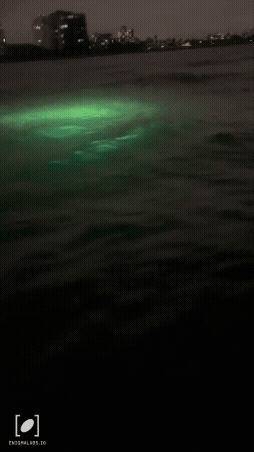
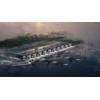
Enigma #303093 - 2023 Jun 11 • Fort Lauderdale, Florida. © Engima
Our fascination with the depths of the ocean revealed itself in some of our most-read stories of 2025.
What’s really down there? asked New Wave Media President Greg Trauthwein in his interview with Matt Grove, Regional Segment Manager Offshore at Seequent in September, in the most watched Offshore Engineer TV show.
Working underneath the world’s waters is a challenge in and of itself, a challenge exacerbated if an operator does not have a clear picture of the make-up of the seabed with insights on the potential traps that might await. Grove discussed the value of finding out for a broad swath of subsea industries, from offshore oil and gas to offshore renewables; dredging to subsea cabling; with emerging opportunities including carbon capture and storage.
The catastrophic implosion of the Titan submersible that killed five people in 2023 maintained reader attention in 2025. The Titan vanished during a descent to the Titanic wreck on a tourist expedition, losing contact with its support ship. After a tense four-day search, its shattered remains were discovered strewn across the seabed 1,600 feet (488 meters) from the bow of the wreck.
It was a tragedy that could have been prevented, a US Coast Guard investigative board found in August, calling out the vessel’s safety culture and manager OceanGate's operational practices “critically flawed.” However, the Coast Guard in conjunction with multiple partners responded to the Titan distress notification with ingenuity and resourcefulness.
On January 13, 2025, an iceberg the size of Chicago, named A-84, broke away from one of the massive floating glaciers attached to the Antarctic Peninsula ice sheet, and a few days later an international team on board Schmidt Ocean Institute’s R/V Falkor (too) became the first to investigate an area that had previously been inaccessible.
The expedition was the first comprehensive and interdisciplinary study of the geology, physical oceanography, and biology beneath such a large area once covered by a floating ice shelf. The ice that calved was approximately 510 square kilometers (209 square miles), revealing an equivalent area of seafloor.
Using Schmidt Ocean Institute’s remotely operated vehicle, ROV SuBastian, the team observed the deep seafloor for eight days and found flourishing ecosystems at depths as great as 1,300 meters. Their observations include large corals and sponges supporting an array of animal life, including icefish, giant sea spiders, and octopus. The team was surprised by the significant biomass and biodiversity of the ecosystems and may have discovered several new species.
More mysterious is the recent release of reports of anomalous underwater objects by UFO reporting app Enigma. Unidentified submersible objects (USOs) refer to any object or phenomenon detected underwater that cannot be immediately identified or explained.
As of August 2025, the Enigma app had logged over 9,000 U.S. sightings within 10 miles of shorelines and major waterways. More than 150 reports describe objects hovering above or ascending into or descending from bodies of water. The U.S. states with the most USO reports are California (389) and Florida (306).
New Wave Media will keep you posted on subsea discoveries in 2026.




 August 2026