
Teledyne Demonstrates Autonomous Systems for Anti-Submarine Warfare in the North Atlantic
© Teledyne Technologies Incorporated
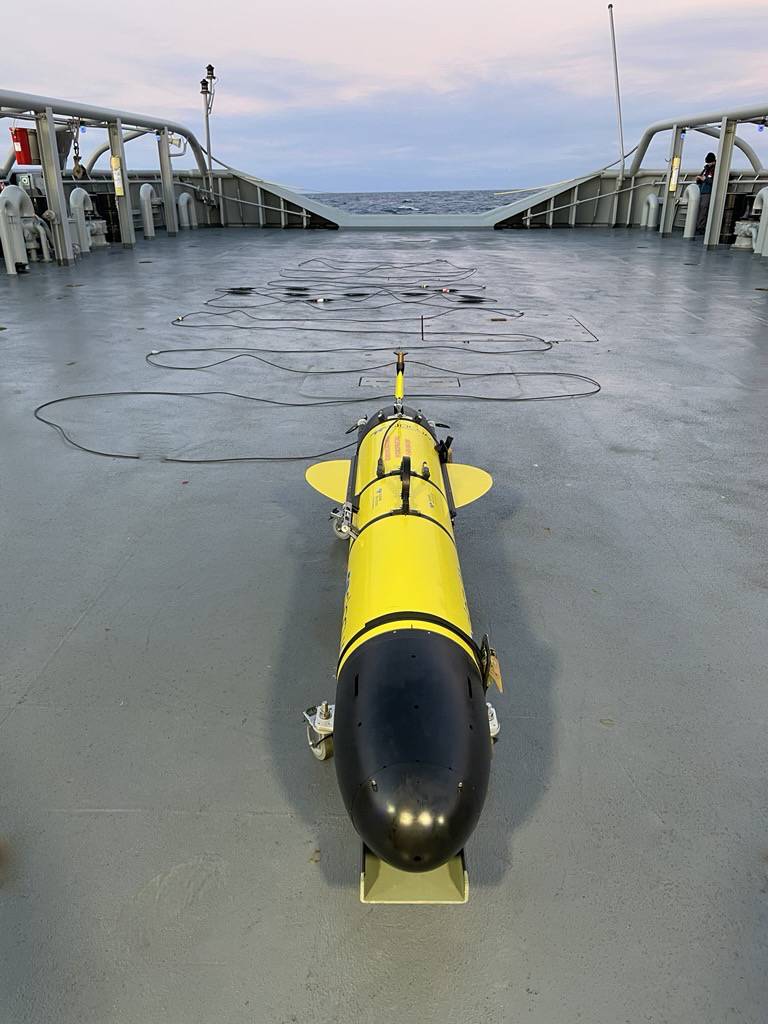
Teledyne Technologies Incorporated announced that, from January 17 through January 22, it conducted an Anti-Submarine Warfare (ASW) demonstration in Icelandic waters using its autonomous underwater vehicles, including the Slocum Sentinel Glider with a 60-meter-long passive acoustic towed array, the Slocum G3 Glider with integrated Teledyne Benthos acoustic communications, and two Advanced Profiling Explorer (APEX) floats fitted with ambient noise Passive Acoustic Monitoring
Several NATO members were in attendance to witness the trials which were conducted from the Teledyne Gavia facility located in Kópavogur, Iceland.
With assistance from the Icelandic Coast Guard, the Teledyne team was able to deploy the autonomous underwater gliders into the North Atlantic in the strategic Greenland – Iceland gap from the Coast Guard Ship ICGV Þór. The Sentinel Glider towed a passive acoustic thin-line hydrophone array specifically designed to identify surface and subsurface vehicle noise in the water. The silent autonomous gliders, transversing the water column to 1,000 meters and equipped with the sensitive passive acoustic array, create a formidable barrier for subsea adversaries.
In addition to acoustic payloads, Teledyne demonstrated the ability for its glider to acoustically exfiltrate data from a sea-bottom node, deployed as part of the demonstration. Simulated mission data was recovered from the node in real-time and later transmitted via satellite to the shore-based Mission Operations Control Centers in Iceland and the United Kingdom.
In addition to the technical demonstration, Teledyne highlighted the ability to establish a Remote Operations Center with help from its long-time partner at the National Oceanographic Centre (NOC) in the United Kingdom, where Teledyne has a European Glider service and repair center. The gliders were piloted in tandem with Iceland from the NOC. Data was retrieved and displayed from the subsea node for use simultaneously at both Operations Center locations.






 August 2026