Follow the Money
related technology with partners in the Norwegian defense and industrial space, and the acquisition of Hydroid, the U.S. manufacturer of shallow-to-medium depth REMUS AUVs (sold to HII in 2020). July 2026 saw three major acquisitions consolidating unmanned maritime systems players:Canada’s Kraken Robotics ($615 million) acquired the UK's Covelya Group, including Sonardyne, EIVA, Forcys, Wavefront Systems, Voyis, and Chelsea Technologies, with technology offerings spanning underwater acoustics, sonar, navigation, imaging, and autonomous systems, significantly broadening Kraken's subsea
From CONOPS to Kill Chains: Building the Architecture of Subsea Dominance
approach route, which operators use to compare against baseline imagery. Something has changed, and an ROV is deployed to investigate.Port security is evolving from discrete surveillance and response systems toward a persistent detect-localize-classify-neutralize architecture.Forcys, now part of Kraken Robotics following its acquisition of Covelya Group, addresses the detection problem with its Sentinel IDS, an intruder detection sonar designed to detect, track and classify divers, swimmer delivery vehicles and AUVs in cluttered harbor environments. ThayerMahan, meanwhile, has developed SeaGuard
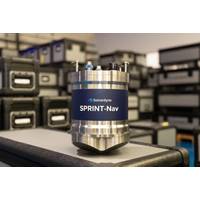
Sonardyne Expands SPRINT-Nav into Family of Navigation Products
Sonardyne, a Kraken Robotics company, has expanded its industry-leading SPRINT-Nav technology into a complete, scalable family of underwater navigation systems for marine robots, built around a single shared architecture.For more than a decade, SPRINT-Nav has combined the key sensors needed for underwater navigation in a single pre-calibrated instrument. This has helped subsea vehicle teams around the world to save space, reduce build complexity and lower integration risk.Now the SPRINT-Nav family has expanded, providing higher performance to the smallest vehicles and extending how far the largest
Hybrid Navy Extravaganza
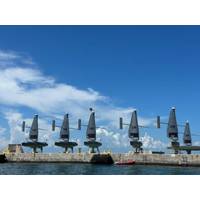
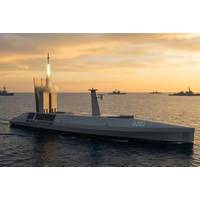
, if necessary, will benefit from high quantities of low-cost air, surface and subsea unmanned systems. These will be used for close-range reconnaissance or one-way strike missions along with lower numbers of high-cost sophisticated systems with surveillance and/or mid- to long-range strike capability.Kraken Technology Group is one of many companies ready with solutions. Anduril will build the small, mass-producible K5 KRAKEN and K7 SABRE unmanned surface vessels (USVs) and integrate payloads and its AI-powered Lattice autonomy software in the US, configuring each vessel for the full range of Navy missions

Unmanned Vessels Proliferate in today's "Hybrid Navy Extravaganza"
, if necessary, will benefit from high quantities of low-cost air, surface and subsea unmanned systems. These will be used for close-range reconnaissance or one-way strike missions along with lower numbers of high-cost sophisticated systems with surveillance and/or mid- to long-range strike capability.Kraken Technology Group is one of many companies ready with solutions. Anduril will build the small, mass-producible K5 KRAKEN and K7 SABRE unmanned surface vessels (USVs) and integrate payloads and its AI-powered Lattice autonomy software in the US, configuring each vessel for the full range

Kraken Robotics Announces Closing of Covelya Group Acquisition
Kraken Robotics Inc. announced the closing of its previously announced acquisition of Covelya Group Limited for approximately $615 million, subject to closing adjustments. Unless otherwise specified, all dollar amounts in this release are denominated in Canadian dollars.As previously announced, the strategic benefits to Kraken from the Acquisition include the following:Allows for deeper customer relationships in the fast-growing defense and maritime surveillance market.Expands product offering and Kraken’s total addressable market in subsea technology.Adds strategic locations for geographic
Autonomous Vehicles Solve (and Create) Problems for Ports
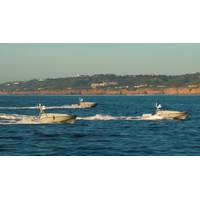
Ocean Robotics, says the integration of AI to analyze data streams from autonomous vehicles is transforming the field.Payloads need not be bespoke. Commercial off-the-shelf (COTS) hardware and software is reliable, cost-effective and fast to implement – something that Forcys, soon to be part of the Kraken group, takes advantage of. Technical Sales Manager, Benn Pickering, says: “With COTS, you benefit from tried-and-tested technology that has already been proven in real-world conditions.”Another key advantage is that COTS solutions evolve to keep pace with emerging technologies. &ldquo
Davie and Kraken Team Up on Autonomous Vessels
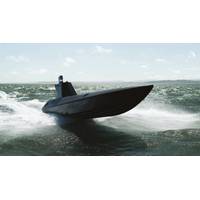
Québec-based Davie and UK-based Kraken Technology Group have announced a strategic collaboration to establish Canadian production, integration and development of Kraken’s autonomous solutions.Davie will provide Canadian capacity and capability to produce, integrate and develop Kraken’s uncrewed surface vessels and autonomous maritime systems.The announcement comes as Western governments increasingly prioritise autonomous and AI-enabled maritime capabilities as part of wider efforts to strengthen sovereign industrial capacity and accelerate naval modernisation.Philip Burns-O’Brie

Kraken Robotics, SEFINE SISAM Collaborate on Mission Planning, Target Recognition Solutions
Kraken Robotics Inc. announced it has signed a Memorandum of Understanding (MOU) with SEFINE SISAM (Strategic Unmanned Systems Research Center) during the SAHA exposition in Türkiye.As part of the agreement, Kraken will work with SISAM to integrate KATFISH into its mission planning software and develop automatic target recognition (ATR) capabilities for Kraken Synthetic Aperture Sonar.Kraken and SEFINE recently demonstrated Kraken’s KATFISH and unmanned surface vessel (USV) launch and recovery system from SEFINE’s RD-22 USV off the coast of İstanbul, Türkiye, validating rapid
 August 2026