AI is Boosting Operational Autonomy
In a world-first for marine science and technology, Teledyne Marine, in collaboration with Rutgers University-New Brunswick, has just launched an autonomous glider that will circumnavigate the globe.Navigational adjustments will be made along the way, as full operational autonomy is something that the underwater robotics industry continues to perfect.The loss of the University of Gothenburg AUV Ran demonstrates what can go wrong. Ran’s most groundbreaking results were achieved during risky missions under the floating glaciers of Antarctica. It was during one such mission that Ran was lost in
Underwater Autonomous Glider Departs to Circumnavigate the Globe
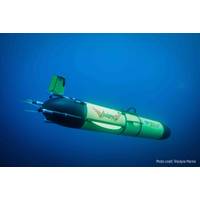
In a world-first for marine science and technology, Teledyne Marine in collaboration with Rutgers University-New Brunswick, will conduct a mission to circumnavigate the globe with an autonomous underwater glider.Using Teledyne’s ‘Redwing,' the near five-year Sentinel Mission departs on October 10, 2025 following a ceremony at Woods Hole Oceanographic Institution (WHOI), which operates the second largest glider fleet in the world.Launched from the edge of the continental shelf south of Martha’s Vineyard, Massachusetts, the Slocum Sentinel Glider will gather data on ocean
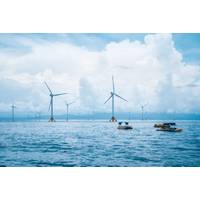
ASL to Work on Metocean Data for Offshore Wind Project in Atlantic Canada
necessary datasets. The analysis focuses on Nova Scotia and Newfoundland and Labrador, where near-term offshore wind development is more likely.The study also keeps in mind the broader Atlantic Canada region, with future data needs for projects in the Gulf of St. Lawrence, Prince Edward Island, New Brunswick, and Quebec. The final report is intended to support the development of public measurement campaigns that can be leveraged by a variety of stakeholders to ensure that informed decisions are made in pursuit of developing Canada’s offshore wind industry over the coming years.The outcomes
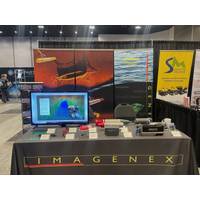
Oceans 2024: A Subsea Technology Showcase
Atlantic-based companies, seeking to further connections and find new opportunities. CLICK HERE to read a special supplement eMagazine covering the people and technologies coming out of Newfoundland & LabradorAs the maritime technology industry grows across the Atlantic provinces (New Brunswick, Prince Edward Island, Nova Scotia, and Newfoundland and Labrador), there are innovative and cutting-edge solutions in continuous development. Collaborations fostered by groups like COVE and local universities provide unique resources and testing capabilities.With recent, new, and soon-to-be-unveiled
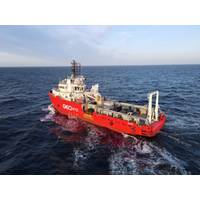
GEOxyz Opens US Office
Belgium-based offshore survey services provider GEOxyz announced it has opened its first office in the United States, located in New Brunswick, N.J., as it expands to serve the offshore wind energy industry on the U.S. East Coast"The renewable energy industry in the U.S. is an important market in full expansion and we are thrilled to establish a presence here," said Patrick Reyntjens, CEO of GEOxyz. "We have extensive experience in offshore surveying and we are eager to provide our services to support the development of new offshore wind farms on the East Coast."The new office will
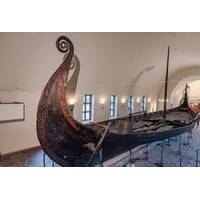
Insights from the 50th International Congress of Maritime Museums
as Atlantic Canada). “Whenever we work with the museum advisory board on a new exhibit, we bring diverse opinions to show the diversity that exists within Mi’kmaw culture,” said Raymond Sewell, a L’nu poet, singer-songwriter and English professor from Pabineau, First Nation, New Brunswick. “We have people from Cape Breton, from New Brunswick, from different areas, and a lot of those stories are included. We have all different kinds of opinions, but we make sure they’re all valued. So, we may have less content in terms of fewer digestible sections of an exhibit, but
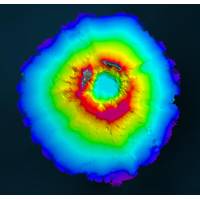
Teledyne Geospatial Partners with Seabed 2030 to Study Submarine Impacts of Volcanic Eruption in Tonga
part of phase two, SEA-KIT International’s Uncrewed Surface Vessel (USV) Maxlimer was used to conduct further mapping inside the caldera.For the duration of TESMaP, Seabed 2030 and Nippon Foundation-GEBCO Ocean Mapping Fellows utilized software provided by Teledyne CARIS (based in Fredericton, New Brunswick)—a Seabed 2030 partner with over 40 years of experience in developing hydrographic and marine geospatial software. The software was integral to the project as they facilitated the monitoring of data quality and coverage, with new data being used for comparative studies against previous
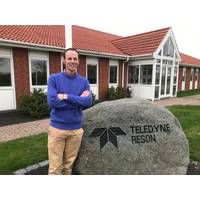
Teledyne Marine Strengthens its Product Management Team
Surveyor for Fugro in Aberdeen, Pim also has valuable overseas experience working for Van Oord, Rijkswaterstaat, C&C Technologies (now Oceaneering) and for Geological Survey of Canada (GSC). With a BSc in Geomatics from NHL Stenden University, Pim attended graduate school at the University of New Brunswick, where he studied under the renowned multibeam system expert, Dr. John Hughes Clarke, earning an MSc.Eng. in Geodesy and Geomatics Engineering in 2008.“As the Hydrographic Market continues to evolve, Teledyne Marine are focused on developing new solutions to continue being ahead, enhance
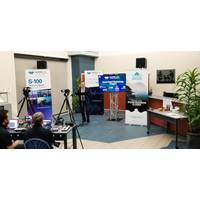
Teledyne CARIS receives Canada’s Ocean Supercluster Award
;s software with autonomous vehicles. This real-world experience (and location on Canada’s West Coast) made them an ideal collaborator and provide a national perspective.In addition to OFG, Teledyne CARIS will be working with other stakeholders to assist on training, including the University of New Brunswick and Memorial Universities Marine Institute. Both universities offer CARIS software as part of their curriculum. Other stakeholders include CIDCO from Quebec and H2i a consultancy from Ottawa specializing in Ocean Mapping strategy
 February 2026