DEA Receives Teledyne Marine SeaBat T51-R Integrated Dual Head
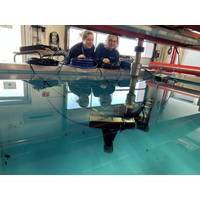
David Evans and Associates (DEA), a US consulting firm, has taken delivery of Teledyne Marine's SeaBat T51-R Integrated Dual Head (IDH) system.DEA’s use of RESON’s sensors has evolved from the early applications of the SeaBat 9001 through to the SeaBat T51 and Integrated Dual Head solutions in use today. Applications include coastal and inland infrastructure inspections, site characterization and habitat mapping using normalized backscatter, navigation and nautical charting surveys, civil works design and construction surveys, cable and pipeline route surveys and inspection, and
Impact Subsea Unveils Topside Control System, Advanced Subsea Multiplexer
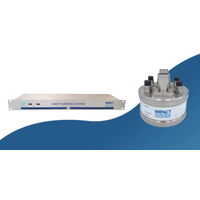
suited for shallow and deep-water applications.The system features four versatile communication ports, each supporting Ethernet, RS232 or RS485 protocols. To ensure scalability, users can daisy-chain multiple seaMux units together or leverage RS485 multidrop and y-splice cables to host multiple serial sensors on a single port. Each port is paired with a software-controllable 24VDC power output featuring real-time power monitoring. Data transmission to the surface is flexible, utilizing either standard Ethernet or high-bandwidth VDSL telemetry over a single screened twisted pair.Unity - Topside
Ocean-Bottom Seismometers Play Crucial Role in Offshore Sensing
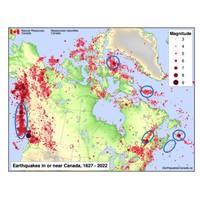
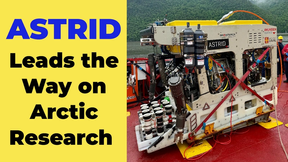
in 2023, around 100 of these have been deployed annually in locations ranging from the Arctic to New Zealand. By placing seismometers directly on the seafloor, researchers can detect much smaller offshore earthquakes and determine their locations far more accurately than is possible using land-based sensors alone.But positioning them and, crucially, recovering them to download their data, then getting them ready for the next deployment, isn’t simple, especially when locations range from ice-covered Arctic waters to 4,700 m deep abyssal plain. And because the NSFI team relies on diverse &ldquo

KONGSBERG Showcases AUV Technology at CANSEC 2026
, intelligence, surveillance and reconnaissance, and seabed security missions, the HUGIN Edge delivers precision data to support faster, better-informed decision-making in complex operational scenarios.Technology designed and built in CanadaThe HUGIN on display is equipped with three advanced sensors engineered at KONGSBERG’s production facility in Vancouver, BC. The company has been developing underwater acoustic technology in the city for decades, leveraging local innovation and talent that contribute significantly to KONGSBERG’s global portfolio.The sensors on display include:FL25:

R.M. Young Company Launches Re-Engineered SNOdar Snow Depth Sensor
snowfall, when reliable data is needed most. Across environmental monitoring, infrastructure management and public safety, accurate snow depth data is a critical operational input. Obtaining that data reliably during active storm conditions has long presented a technical challenge. Most snow depth sensors rely on ultrasonic technology, which is susceptible to signal degradation in falling snow. SNOdar uses LIDAR, Light Detection and Ranging, to provide continuous, accurate measurement even in the middle of a snowstorm. R.M. Young Company, a manufacturer of professional meteorological
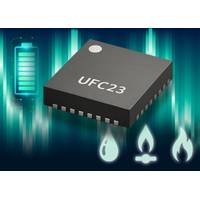
ScioSense Launches UFC23 Ultrasonic Flow Converter for High-Precision, Ultra-Low-Power Smart Metering
improved resolution and offset stability with ultra-low standby current, enabling high-end battery-powered water, heat, gas and leak detection meter designs across a wide range of smart metering applications.ScioSense, a leading developer and manufacturer of semiconductor-based environmental and flow sensors, today launched the UFC23 – the 4th generation ultrasonic flow converter for measurement in water, heat and gas meters.How can meter manufacturers improve measurement accuracy, extend battery life, and retain control of their preferred system architecture? In modern applications, flow calculation
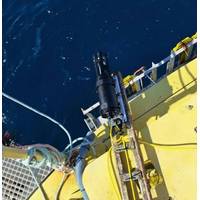
Vicinay Marine, Tecnalia Develop Remote Offshore Mooring Corrosion Sensor
Vicinay Marine and Spanish applied research center Tecnalia have jointly developed a sensor designed to remotely monitor corrosion on offshore mooring lines, aiming to improve the safety, reliability and service life of offshore systems.The companies said the sensor uses electrical resistance measurements to quantify section loss in mooring components in real time, model degradation trends and predict remaining service life.The technology is targeted at offshore wind farms and other floating offshore systems, where corrosion remains a key challenge affecting the integrity and durability of chains and
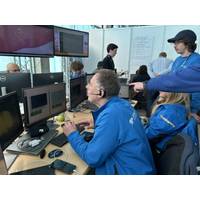
Teledyne Participates in 2026 SeaSEC Challenge Weeks: DATA2SEA
Teledyne is participating in the 2026 edition of the SeaSEC Challenge Weeks, “DATA2SEA” (SCWD2S), an advanced maritime security exercise focused on real-time multi-sensor data integration for the protection of critical underwater infrastructure (CUI). In collaboration with the German Navy and hosted by the Rostock Institute for Ocean Technologies, this year’s DATA2SEA program brings together a range of sensing technologies in realistic operational conditions to explore how real-time data integration can enhance maritime security operations. The exercise shifts the focus beyond

DOF Selects Kongsberg Listen for HUGIN AUV Survey Platform
technology that complements acoustic survey tools by providing additional insight into subsea environments. Applications include pipeline inspection with cathodic protection evaluation, marine mineral exploration and buried cable positioning.The HUGIN platform is designed to collect data from multiple sensors simultaneously, enabling operators to gather geophysical datasets from a single survey mission.Kongsberg Listen was launched earlier this year following Kongsberg Discovery’s acquisition and further development of electromagnetic sensing technology originally developed by Argeo.“HUGIN

 February 2026