
Integrated, Multi-Domain Port Security
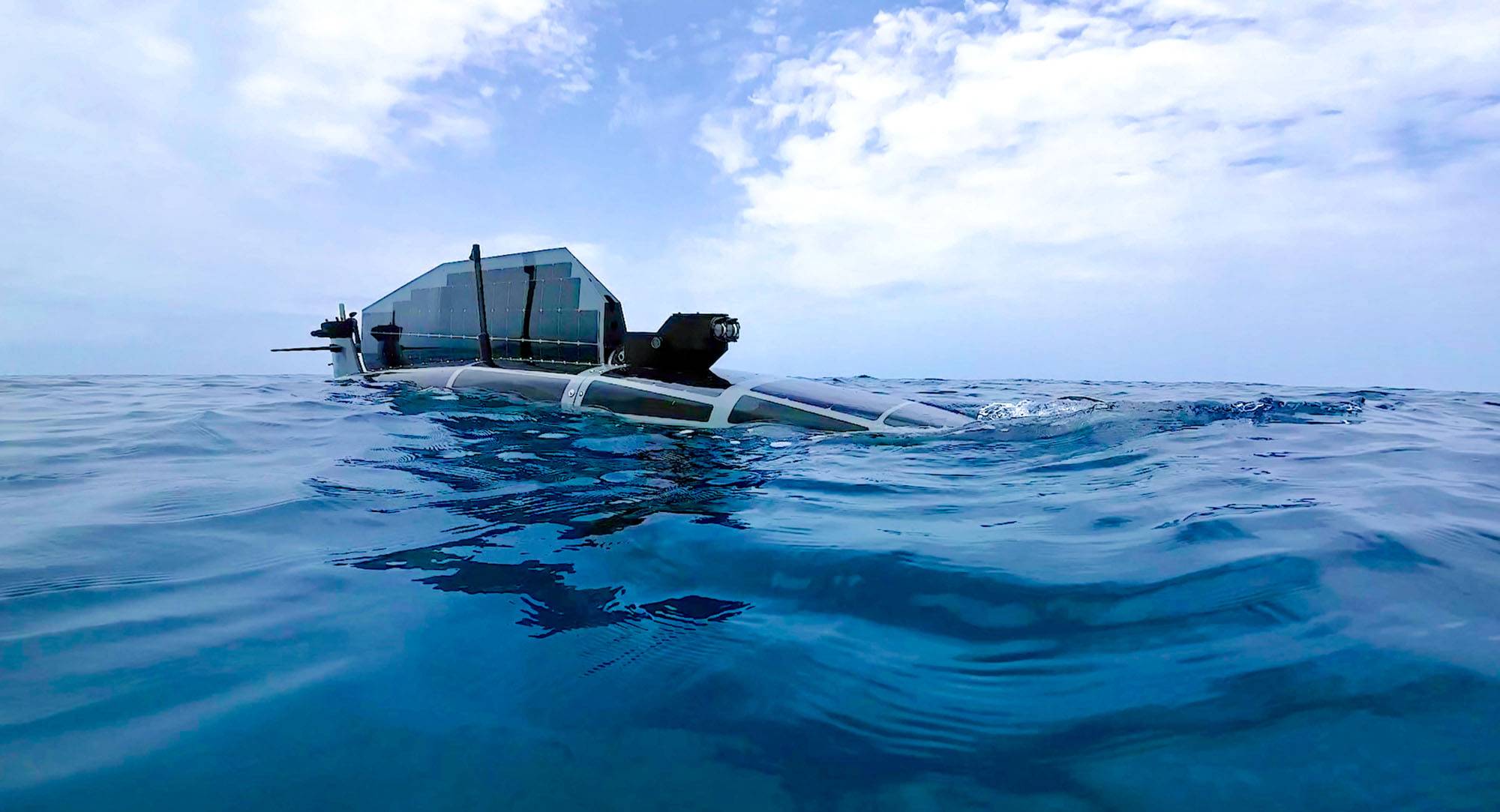
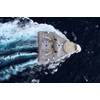
Ocean Aero’s Triton autonomous underwater and surface vehicle (AUSV) was taken up by the Port of Gulfport last year. Credit: Ocean Aero
An Australian Federal Police commander, noting the billions of drugs intercepted as they entered Australia last year, said: “No matter how creative these criminals attempt to be, our message is clear – we are on to you."
It’s a challenge that Lemvos Robotics offers help for. The company’s LM450 multirole USV supports sonar, ROV/AUV launch systems and UAV docking, enabling environmental monitoring, defense/security and seafloor mapping tasks. It operates remotely or semi‑autonomously via satellite or 5G, carries over 300 kg and can stay on mission for weeks.
For drug detection on ships hulls, it’s a lot faster to deploy that divers, says Lemvos co-founder Daniel Severinsen, so security services can be more proactive in checking suspicious targets. A key feature is the vehicle’s ability for remote, autonomous docking. “For short missions, the time it takes for someone to get down to the vessel can be just as long as the mission itself. Autonomous docking is useful in this scenario. Someone can log onto a computer and start operating the vessel immediately.”
One of the newest and most potent threats to border security comes from autonomous vehicles approaching covertly from beneath the water’s surface, says Simon Goldsworthy, Global Business Development Manager – Intruder Detection Systems at Wavefront, and what’s required to manage this is persistent autonomous multi-domain situational awareness and response.
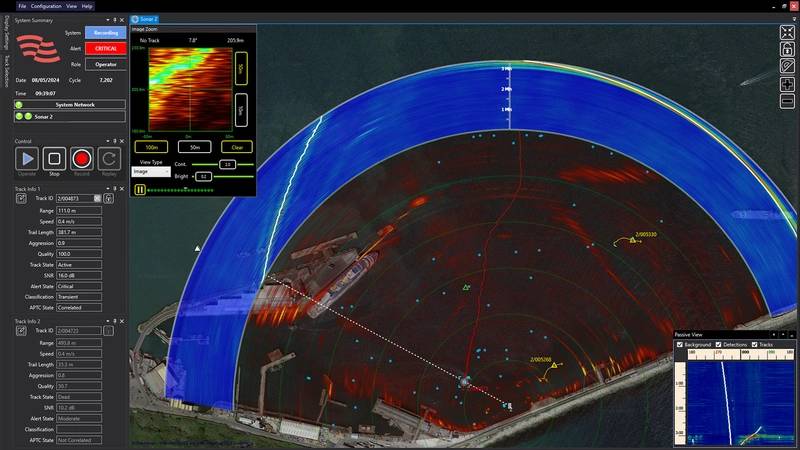
Wavefront Systems, MARSS and Forcys recently provided a week-long demonstration of their combined underwater and multi-domain security systems, hosted at Portland Port, UK. Observers were able to watch the threat unfold in real time as Wavefront’s Sentinel Intruder Detection Sonar (IDS) and MARSS’ NiDAR Command and Control platform worked in tandem to detect, track, classify and respond to a range of hostile events from underwater and the air.
NiDAR is a sensor-agnostic, multi-domain surveillance and security platform that integrates data from a wide array of sensors including sonar, radar, radio frequency and electro-optical/infrared.
The demonstration showed the power of integrating both passive and active sonar data, using Wavefront’s SInAPS system, when tracking low target strength drones or very slow-moving targets in the highly cluttered seabed conditions typical of some harbors.
“SInAPS’s real power lies in its ability to classify and then establish threats that would previously have taken much longer to identify,” says Goldsworthy. “For our clients, the unique benefit is that a threat can now be ‘heard’ wherever they are. This applies to any intruder hiding in a sheltered area or somewhere that reflects active sonar—for example, a pipeline or harbor wall where detection is difficult with a traditional sonar solution. Sentinel’s SInAPS technology capability also gives superior tracking ability of submersibles and drone targets, from a single point sensor.”
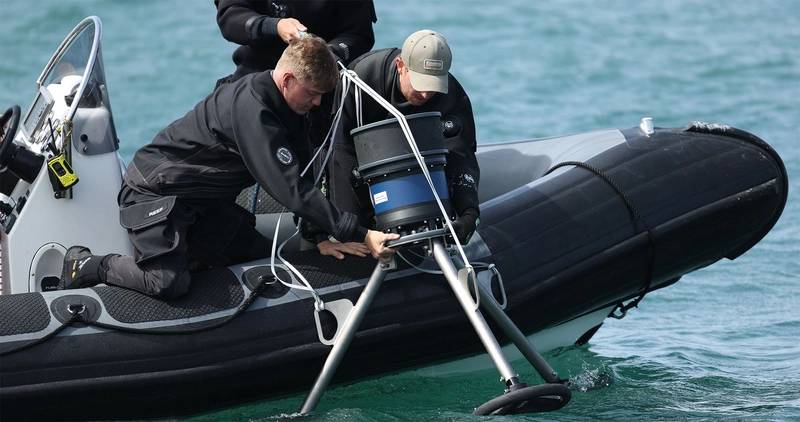
 Wavefront’s Sentinel IDS sonar head being deployed from a RHIB. Credit: Wavefront
 Wavefront’s Sentinel IDS Software screenshot showing diver tracked by Active and Passive Sonar. Credit: Wavefront
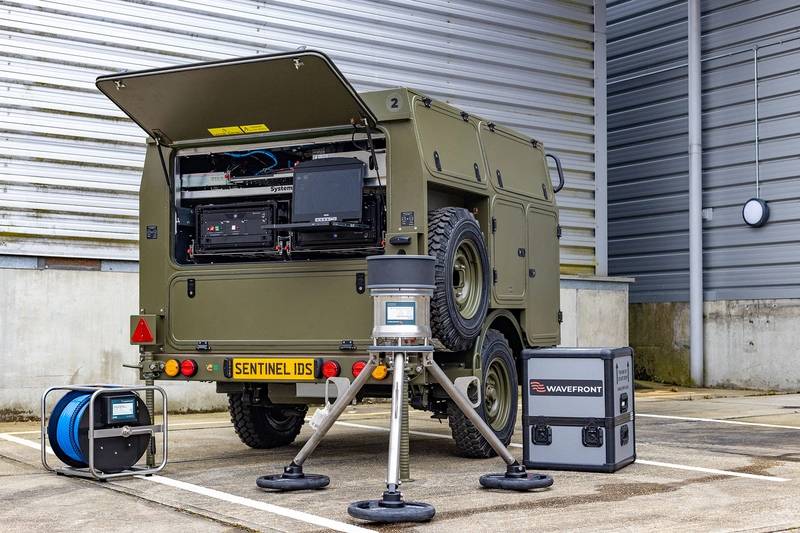 Wavefront’s Sentinel IDS Expeditionary Trailer. Credit: Wavefront
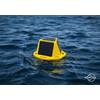
Late last year, Ocean Power Technologies (OPT) announced a partnership with Mythos AI to integrate advanced AI-driven autonomy software across OPT’s fleet of WAM-V autonomous surface vehicles (ASVs) and its PowerBuoy platforms that will be able to charge them. The aim is to accelerate the range of integrated aerial and subsea solutions the company can deliver to customers in defense, security and commercial sectors. The systems will leverage real-time edge processing, multi-sensor fusion and adaptive learning for enhanced situational awareness, obstacle avoidance, multi-vehicle coordination, and, in later phases, advanced vehicle-buoy collaboration.
It’s challenging to defend against uncrewed systems, says Jason Weed, SVP Commercial Sales at OPT, so many ports are now focused on change detection. However, every port has different pain points, so solutions are adapted accordingly. A key advantage of the PowerBuoy system is that it can provide a radar and camera perspective far from shore, pushing the decision space out for organizations like the Department of Homeland Security and the US Coast Guard. “You now change the calculus for deterrence. If a ship is dumping drugs off the coast, for example, they are going to have to do something different now. Sometimes just having those sensors in place changes behavior.”
Ocean Aero’s Triton autonomous underwater and surface vehicle (AUSV) was taken up by the Port of Gulfport last year. The AUSV runs ongoing scans using a variety of subsea payloads including bathymetry, side-scan sonar and magnetometers to produce high-resolution comparative datasets for real-time change detection. The initiative is designed to detect irregularities in both port traffic and infrastructure, a feature that port CEO Jon Nass says has the potential to save the port millions. It can also play a crucial role in post-hurricane recovery, identifying debris and potential threats to port infrastructure in the aftermath of severe weather events. Ensuring the channel and harbor are clear for ship traffic is critical to the rapid reopening of a port.
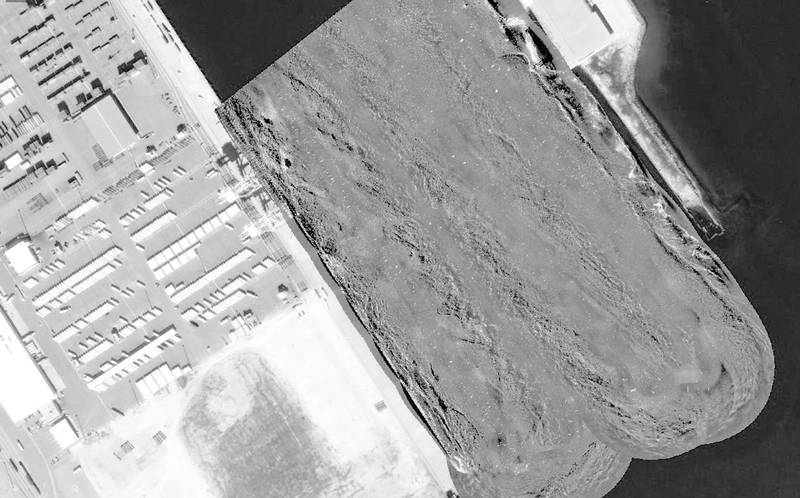 Ocean Aero’s AUSV runs ongoing scans using a variety of subsea payloads including bathymetry, side-scan sonar and magnetometers to produce high-resolution comparative datasets for real-time change detection. Credit: Ocean Aero
AUVs from Boxfish Robotics are providing change detection in a different context – environmental rehabilitation within port waters – for Ports of Auckland, New Zealand. Ongoing harbor health monitoring and environmental compliance in the Rangitoto Channel requires repeatable seabed video transects with sufficient image quality and positional accuracy to support environmental assessment and long-term comparison. Traditional approaches, including diver surveys, towed camera systems and tethered ROVs, can struggle to deliver consistent altitude, lighting and spatial repeatability, particularly in currents, says Vera Bronza, marketing and sales manager at Boxfish.
Seabed transects were executed using a hovering Boxfish AUV programmed to autonomously navigate between predefined waypoints across the Rangitoto Channel. The mission was planned in advance and executed without tether or piloting, relying on onboard navigation. Identical missions can be re‑run months or years apart. This consistency supports time‑series monitoring and change detection, which are core requirements for many scientific and regulatory programs.
“We see a global trend for ports to add biodiversity in recovery zones to boost their sustainability,” Bronza said. “Our AUVs are a very effective way of doing benthic surveys to make sure the changes are positive.”
The AUV can also be trained to identify invasive species, including on ships hulls, and can be fitted with manipulators to then remove them. It can also be fitted with lighting designed specifically to check sea chests where either invasive species, drugs or other illegal objects could be otherwise difficult to detect.
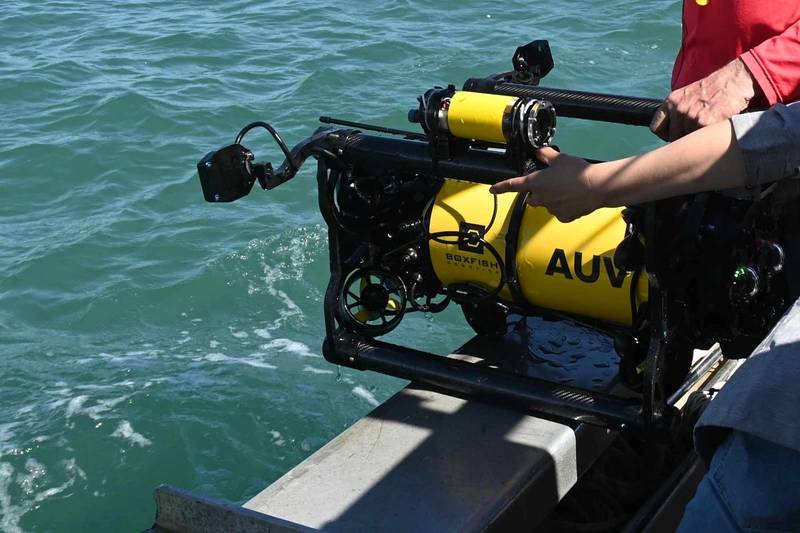 Boxfish Robotics AUV being deployed. Credit: Boxfish Robotics
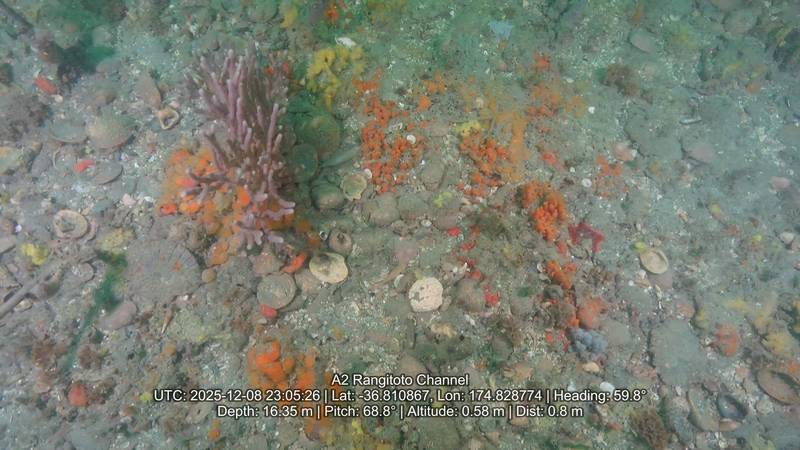 Boxfish Robotics are providing change detection for environmental rehabilitation within port waters. Credit: Boxfish Robotics



 August 2026